

In brief: A roundup of the weeks biggest military and political events in Ukraine. The AFU finally announces the results of its somewhat secret Lyman counteroffensive. Ukraine is poised to defeat Russia’s Black Sea Fleet – again. The air battle continues with tit-for-tat barrages. And the Kushner-Witkoff vaudeville show bombs.

Sept. 12, 2026

The most impressive pure war news this week probably was two days of damaging drone strikes in Russia’s southern Kuban region: warships hit, sea drones participating, air defenses hunted down and destroyed.
Russia is visibly shifting from periodic big strikes with five to six days of light drone raids over the rest of the week, to what looks like individually planned attacks designed to make more unlivable places the Russians want the civilians to be miserable. This is Kyiv, Odesa, Kherson, Sumy and Kharkiv. More civilians are getting killed and injured as a result.
This week not only the Americans with their goofball “peace initiative” were in the news, NATO stepped on a rake as well by running an impressively big and complicated air defense practice exercise with lots of fighter jets and air watch aircraft and so forth, simultaneously with a Russian drone flying deep into Romania, quite unmolested by NATO. So if the Russians were deterred by training, then for sure NATO deterred Russia this week.

Kyivites take shelter in a metro station overnight Monday-Tuesday
The Front
In general the trend of fighting seems to be shrinking Russian pressure in almost all sectors. Based on the field descriptions this is the textbook “we’ve just about run out of men to send on attack” phase. This is the fifth (!) Russian summer offensive when we’ve seen this happen.
Zaporizhzhia sector – 1st Assault Regiment commander Dmyrtro “Perun” Filatov gave a Monday interview to TV24 and he said that in his sector Russian attacks are falling off, and that it seems like troops are getting transferred out of this sector to other parts of the front. Attacks are still taking place but less often and with less-numerous groups. The term he used is “significantly decreasing.” The figure he used was “about 40 percent.”
Filatov also confirmed a lot of the rumors and speculation we’ve heard about Rybne, in the Hulyaipole AO. The village was actually captured on July 30 by Ukrainian forces but it was three weeks before open sourcers confirmed its capture. According to Filatov the success was the result of a meticulous, long-term operation where the first step is cutting off supply to a targeted locality, then potential for reinforcement by infiltration, and then systematic, slow house-to-house clearing.
For those of you who like “maneuver warfare,” this is the template that the Ukrainians are using, if your country doesn’t or isn’t planning to, you are behind the curve.

This is a training image from 20th Brigade Liubart but I think still newsworthy, because this is a combat unit actually in a war, performing first aid training. (Photo: 20th Brigade Liubart)
Elsewhere in the sector, this is from the Ukrainian milblogger Mashovets (who in turn is sometimes often the main source of “analysis” by some big name Western think tanks I could name), Russia’s 29th Combined Arms Army has actually fallen back, having lost the village Myrne, and is trying to prevent the Ukrainians from pushing through a defense line built on the Vovcha River and the villages Komar and Perebudova. If the Ukrainians are not stopped, then Russian forces would be caught on the wrong side of the river, meaning the men might walk out but not their heavy equipment. Mashovets writes that even though elements of the much-battered 90th Tank Division have been committed to the area, it’s not clear the Russians can hold and if they can’t, then “the prospect is a collapse along the lower Mokri Yaly” River. But none of this is confirmed past a total AFU ban on ground reporting from the sector.

This map published on Wednesday by the OSINTer Vjesti shows well the Russian predicament around Komar: troops still in a village but meanwhile the Ukrainians hold the river crossings behind it. (Vjesti)
Pokrovsk/Dobropillya – We were graced this week by a detailed interview with the chief of staff of Azov Brigade, which is of course the hardest-fighting regular unit in 1st Army Corps, and possibly in the entire AFU, this is the core Azov. His name is Lev “Horus” Pashko and according to him, the Russians are stopped cold, the war right now is running a meatgrinder with the Russians providing the meat. According to Pashko, 1st Brigade’s AO is Dobropillya, which Azov recaptured from the Russians last summer.
According to Pashko, Russia is still trying to push into this sector using numbers and accepting losses, and the ratio of Ukrainians to Russians in some areas can be 1 to 60. Thanks to open fields of fire and drones, he said, the Russians are all killed or wounded, they do not gain ground. Most of the soldiers doing the attacking are force-mobilized, i.e., they were civilians who got in trouble with the law or had money issues and signed a Russian army contract and wound up being sent against Ukrainian positions with little training. The quality of the Russian troops is, he said, extremely low.
The main method of Russian attacks is to probe for gaps in defenses and infiltrate without regard to future supply or means of retreat. They are ordered to raise flags at locations reached, there is no instruction on fighting Ukrainians. Pashko’s evaluation: “The deeper they go, the easier it is for our scouts and special forces to destroy them… They can capture a place that has already been completely destroyed, lose 140 soldiers in two weeks – and fine, they take it. They lost half a battalion, and we didn’t.
BTW, not confirmed, but the German reporter Julian Röpcke this week reported Russian officers are sending their assault troops off with the extremely embellished – i.e. containing false information about what terrain is in Russian and what’s in Ukrainian hands – maps in hand. I hadn’t heard that before and generally reports are Russian troops find their way by being told to follow a drone or a road to an obvious location, there are no maps. But maybe that’s the case sometimes. As a result, according to Röpcke, Russian infiltration groups run headlong into solid Ukrainian positions right in the middle territory supposedly already captured by Russia.
Regarding personnel and organization, Pashko said that since Azov is National Guard, some of the reforms and new contracts are only now reaching the brigade. There is recruiting going on with men who joined for a year on the 18-24 terms, according to Pashko most intend to re-up. (Note: This should not be taken as an indicator for the entire AFU, unit morale and esprit, and also small unit commanders in Azov are exceptional). But deferrals and rotations are happening and a steady flow of replacements and reserves is building.
For those of you with experience in NATO armies, this is nothing special. In the AFU this is a very big deal, steady personnel streams and even vaguely predictable company- and battalion-level soldier rotation, never mind something resembling reasonable career progression, is something the AFU has struggled with for pretty much for as long as Ukraine has existed.
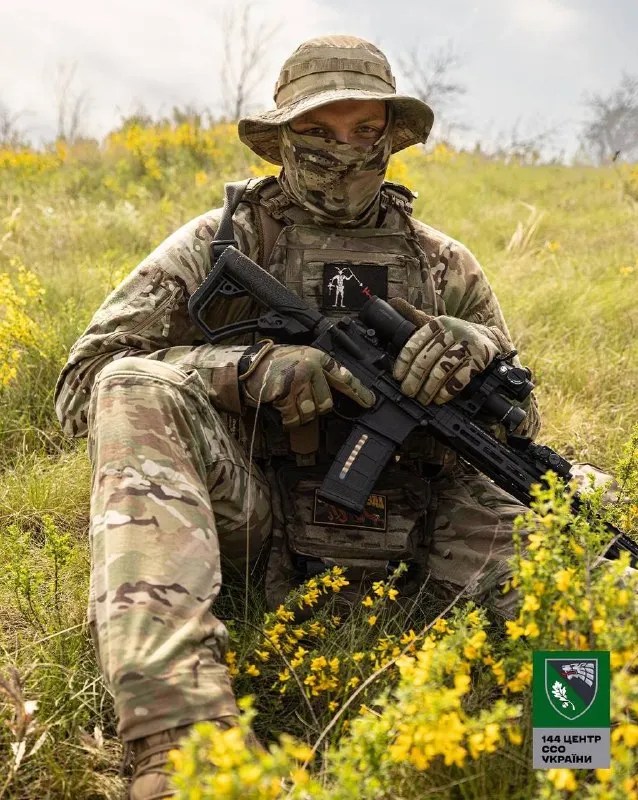
Excellently-composed training image published by the Ukrainian special forces on Sunday, if they get tired of sneak-deaky operations some of them deffo could get jobs as news photogs. But for less money I think. (Photo: 144 Center SSO Ukraine)
Kostyantynivka – The Ukrainian 210th Assault Regiment has been deployed to the Kostyantynivka direction, apparently supporting the defense of the city’s western flank under the 19th Army Corps. Also moving into the sector is 46th Airmobile Brigade, a veteran outfit with a good combat reputation. This is allowing the 24th Mech Brigade, who have fought as long as any formation in the entire AFU, to get a break from duty in the line; they have been in this sector for close to a year.
Parallel with Ukrainian reinforcements/fresh troops flowing to Konstyantynivka, there are reports from several units in the area that the Russian attacks into the city have fallen off to very little. Some drone crews are complaining about the absence of targets.
Lyman sector – It’s official, the AFU finally announced it, meaning 3rd Corps, had completed a slow counter-offensive over the past three months that liberated 10 villages and recaptured about 150 square kilometers of Russian territory. This had been an open secret for much of August and by early September only the AFU itself was pretending no one knew that 3rd Corps had been running successful assault operations. This review formally acknowledged the success last week. These are the first specific claims of how much territory was liberated though. It is a clear and substantial Ukrainian victory. It is all over the Ukrainian news and a bunch of Russia milbloggers are saying the same thing. So far my newspaper’s done two pieces on this:
So if you haven’t heard about it in the western mainstream, it’s not because us in Ukraine weren’t trying to get the information out. Between the two articles you will get a decent picture of what’s been happening. Graphically, I strongly recommend this excellent video by Clement Molin that shows what’s been going on.
On a connected note, the commander of 3rd Corps Andriy Biletsky got irritated at a Friday Russian propaganda TV television conference in which Putin told a bunch of officials in Bishkek the Russian army is doing great and just on Friday it captured and placed under undisputed Russian control the Ukrainian city Svyatohirsk. My newspaper did two articles on that as well.
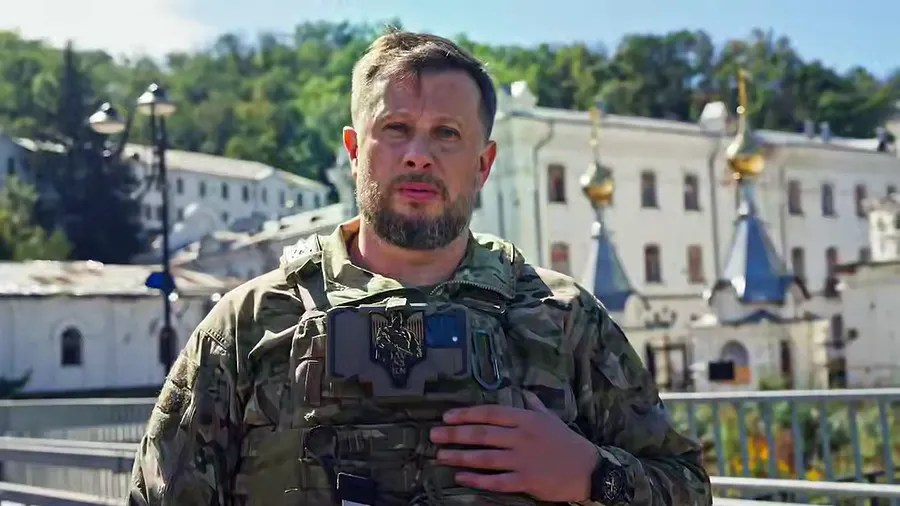
Gen. Andriy Biletsky, Commander 3rd Corps, records a video from inside Svyatohirsk, a town Russia said is now totally under Russian control. (Screenshot from video)
Most Ukrainians know the place as an ancient monastery in a very wooded part of Donetsk region, tourists and newlyweds go there. These days Svyatohirsk is in 3rd Corps sector and so over the weekend Biletsky recorded himself going on a pleasant walk through leafy Svyatohirsk, and most of the the center. The monastery was peaceful, birds were singing, people were walking around, no bombs, no shooting, no Russians. Biletsky didn’t even bother wearing a helmet. His best insult was calling Putin a moron with a clown nose. And if you want even more background on Ukrainian offensive activity in Kharkiv/northern Donetsk region, here’s an article about some Colombian/Brazilian foreign fighters that, more or less where Putin said they were surrounded, took ground and destroyed enemy:

Russia’s Monday-Tuesday missile strike hit the We-Ukraine TV station in Kyiv, several journalists injured. Sorry for the graphic images, but this is what happens sometimes when a ballistic missile doesn’t get intercepted. (Collage by Stefan Korshak)
Russia bombards Ukraine
As we have seen Russia’s bombardment generals like to switch tactics from time to time. Last week the tactic was low-grade, but constant strikes against Kyiv with the probable intent of keeping the air raid warning on in the city constantly. It was a pain. Then they quit for a day so Trump’s envoys could visit Kyiv and pretend to work on the peace process.
Overnight Monday-Tuesday the Russians launched another big strike, surprising no one. It came less than a day after Kushner and Witkoff took the train to Poland. The Russians fired Onyx anti-ship “hypersonic” missiles from the Bryansk, Kursk Oblasts and from Crimea; Iskander-M/S-400/KN-23 ballistic missiles from the Bryansk and Voronezh Oblasts; and 32 Kh-101 air-launched cruise missiles from the Vologda Oblast. Also, there were about 166 strike and decoy UAVs, about half of them jet-powered, launched from the usual locations.

The Russians dropped a glide bomb on an apartment building in Kherson on Sunday. (Photo: Realny Kherson)
The Ukrainians returned to their policy of not announcing how many incoming hypersonics and ballistics there were. My personal estimate is there were at least eight explosions exactly like big missiles that night.

The Sumy elektrichka train, an economical means of transport people use in northern Ukraine, hit by Russian drones, official image, Wednesday. Ten injured in three attacks on trains over the day.
I witnessed one possible ballistic intercept. One. The way it seemed to me, the ballistic missiles arrived at about 3:30-3:50 a.m. and the cruise missiles maybe 40 minutes later. In the interval you could hear jet engines from time to time but whether that was Ukrainian fighters or Russian Banderole drones, I can’t say. For practical purposes, there was not air defense against the ballistic missiles. When the cruise missiles came in you could hear everything from autocannon to machine guns, not constantly, but in bursts. Sometimes tracers were visible.
The main targets, as before, were the Odesa region and the Kyiv region. According to the Ukrainian Air Force as of 9 a.m. they had shot down 2 ballistic/hypersonic missiles, 31 cruise missiles and 142 UAVs. There was one big hit during the day near the river, the southern section of the city that burned for most of the afternoon. Two people dead, about ten injured. Later the death toll rose to four.

Noodle and instant foods factory in Bela Tserkiv burns following a Russian ballistic missile hit on Tuesday. (Photo: Realna Viyna)
The best-confirmed Russian hit was to a Varus grocery store in the Solomyanskyi district, which was pretty much leveled. An Epitsentr superstore in Chernhiv was hit and set on fire. In Odesa, Europe’s single most extensive site of cheap wholesale Chinese knock-off goods imported probably less than legally – the Seventh-Kilometer open air market – got some of its trading rows blasted.
On Wednesday and Thursday, the Russians hit the Manufactura shopping center/movie multitheater in Sumy with jet-powered drones. The first attack hit a car park killing two (man and woman aged 21) and injuring about 20. The second strike hit the next day, no injuries reported. However, two guided aerial bombs (KABs) hit a residential area on the outskirts of Sumy. This injured 11 people including three children (girls aged 8 and 17, and a 14-year-old boy). Later there were reports of about 20 were hospitalized. Also, a Thursday drone attack on the town Shostka, near Sumy, killed one man and injured a woman. All civilians.

Yamal, northern Russia, 2,900 km. from Ukraine, the Novy Urengoy gas condensate factory fire burns, big fire flames to sky, Sept. 9. This is probably a new long-range strike record. (Screenshot Russia internet)
Ukraine bombards Russia
We kick off this section with a Wednesday Ukrainian strike against Yamal’, up by the Arctic Circle, where the Novy Urengoy gas condensate factory fire was visited by long-range drones. Natural gas burns better than crude, so Russian social media recorded some epic fires. Early reports put the raid at 3,100 km (1,926 miles), a new record. By Thursday cooler heads had prevailed and the Ukrainian internet decided it was about 2,920 km (1,814), still a new long-range drone strike record for this war, and probably in history.
But Ukraine’s really impressive air operations this week targeted Russia’s Black Sea coast and the Kuban.
The most visible event (not counting degrading attacks against Russian air defenses, which basically never stop) was an Unmanned Systems Forces (USF) strike hitting Sochi on Sept. 9. Early reports from that based on Russian social media with summer vacationers well-represented, and some drone video from the Ukrainians, was that fuel storage sites (one had been set afire on the 3rd) and (yet more) air defense got hit. Meanwhile the Russians said everything was OK except for some small fires from falling debris.
Fast-forward 24 hours, and open source satellite imagery showed up. The damage toll almost certainly included, various targets: three military helicopters ( Mi-8, Mi-28, Ka-52 ), two oil depots, a major radar transponder on the mountain overlooking Sochi (two hits), and an S-300 position (ground systems smashed and damaged). Plus the commodities industry reported a pair of grain terminals in Anapa were shut down.
On Friday there was more news: At Anapa airport, drones had destroyed a Su-30 fighter jet and an Mi-8 military helicopter. This was on Sept. 4.

Novorossiysk, Wednesday morning, NASA imagery. Those are fires. (Image: NASA)
Some militaries would have beat their chests, found some media to tell the reporters how “awesome” their military is, headed back to the O-club for cocktails, and called it a day. But Russia’s opponent here is the world’s most capable and lethal drone force, the Ukrainian USF and Ukrainian special forces.

Sochi International Airport, imagery following a Sept.4 strike, note the other aircraft still unhit. Source is watermark, Wednesday.
So, on Thursday, the next night, Sept. 10, the Ukrainian drones returned to Krasnodar and Russia’s Black Sea shore. This time they hit Sochi pier with sea drones, big fires, and possibly missiles. Sea drones were seen to detonate near the stern of warships tied up at the wharf, possibly in a repeat of the Ukrainian tactic of damaging Russian ships by setting off underwater explosions near the rudders and propellers.
The Ukrainians claimed that in the commotion they also put a Neptune anti-ship missile into the side of the Admiral Gessen frigate, which as many of you know sticks its bow outside Novorossiysk port from time to time to lob cruise missiles mostly at Kyiv. Thursday evening brought a credible satellite image of the damage. Other images seemed to confirm damage done to more warships, like, the small minesweeper Zheleznyakov, and the large amphibious assault ship Pyotr Morgunov, and a Buryan-M class missile boat.
Satellite images also confirmed damage to other ships but it’s not clear to me at this point which were operational and which were just there as missile sponges. In any case, anyone who remembers the humiliating Russian naval retreat from Sevastopol, it’s coming again in Novorossisisyk. Maybe the survivors will shift to Abkhazia, maybe the Russians will just try and send them up the Volga. But the Black Sea Fleet is defeated.
OK, that already would have been an excellent two days’ work for any air force on Earth.
The detested-by-Ukraine Russian missile boat Buryan-M, following a Wednesday strike in Novorossiysk. (Image: Exilenove+)
That was not all for the USF. Same night, Dagestan, so Caspian Sea, the port Makhachkala was hit and at least one ship set on fire, type undetermined. Among the strike packages were FP-1 drones. There is wide speculation the ship was Iranian but that’s totally unconfirmed. Finally, same night, I don’t yet know the cause, a cargo ship in the Azov Sea was set afire.
That’s two major Ukrainian drone raids, 300-plus aircraft both times, strike packages hitting something like five and possibly seven or eight separate targets a night, two nights in a row. Among other targets, three warships and three cargo vessels hit. At least two USF brigades and the elite USF 1st Training Center were involved. There may have been more. These are substantial, effective and powerful Ukrainian air strikes. How can the West keep pretending this isn’t happening?
P.S. — On Friday several massive Flamingo missiles hit a military chemicals plant in Volgograd and the Russian internet seems to agree there were two good hits on the roof of the main production building, smoke and fires. Flamingos are much bigger than the standard Ukrainian drone, they are flying aerial bombs and as big as a small fighter jet, so pretty easy to shoot down. But somehow the Ukrainians got some through.

The middle strikes haven’t stopped. This is probably a 1st Corps-associated drone attacking a microbus in Donetsk. The result was a near miss. (Screenshot: source Supernova+).
Here’s the hit list for the past seven days:
- Crimea, Krasnoperekopsk, 2 big explosions, power down in Simferopol, Sept. 5
- Rostov, many drones, lots of small arms, fires at military airfield, Sept. 5
- Ryazan, oil refinery, set on fire, Sept. 6
- Crimea, Dzhankoi, either air defense or power transmission, more fires, Sept. 6
- Mediterranean, Lady Maria/RU cargo ship and shadow arms transporter, hit by sea drones off Oran, fires, Sept. 6
- Saratov, Rosneft oil refinery, fires, Sept. 8
- Crimea, Sevastopol, radio center hit, lots of anti-aircraft, Sept. 8
- Krasnodar, Novorossiysk, air defense and shore facilities, grain terminal, oil storage, many fires, Sept. 9
- Krasnodar, Anapa/Gelendzhik, military airfield hit, SBS 1st Separate Center claims destroyed Su-33 fighter jet (rehit from the 4th) Mi-8 helicopter (possibly rehit from the 4th), “Kasta 2E2” and the 92N6 radar from the S-300/400 system, Sept. 9
- Yamal, 2,900 or 3,200 km (!), Novy Urengoy gas condensate factory fire burns, big fire flames to sky, Sept. 9, Russian internet. This is probably a new long-range strike record.
- Novorossiysk, Long Neptune missile hit on Admiral Gessen frigate, other Russian warships took Neptunes as well, Sept. 9
- Sochi, sea drones, either warships hit or piers hit, major naval strike, Sept. 10
- Saratov, Ozon warehouse set on fire with roof hits, Sept. 11
- Saratov, oil refinery burning, Sept. 11
- Volgograd, chemical factory, FP-5/Flamingos, probably two hits, prop drones audible, Sept. 11
- Perm region, Azot chemical factory, FP-1, daylight, no air defense, Sept. 11

This was published by HUR, but the imagery is by CyberBoroshno. This is confirmation of a “kill the archer” operation that worked, the HUR’s “GROUP 13 strike unit hit a Bastion DBK hypersonic/anti-ship. ( missile launcher in the vicinity of Biller Ridge, Crimea. The facility is called Object 100. Imagery published on Monday, strike took place earlier this month. Supposedly the Ukrainian navy tried to hit this site as well as the army, with ATACMS. (Image: HUR)
The final item in this section as always is the hit list for the week. Here’s a graphic from Istribin showing the gap between how much oil Russia could produce and export, based on OPEC estimates, and how much it is actually producing and exporting. Right now the price of oil is at a near-record high. Russia really could use the money. But Ukraine’s drone strike campaign is cutting into that, visibly and significantly.

Red is what Russia is allowed to export per OPEC-agreed quotas, blue is what Russia actually is producing. It’s an oil seller’s market right now but the problem for Russia is having something to sell. (Image by Istribin)
Real and fake serious countries – true arsenals of democracy
On Monday the news came out that Britain would donate £100 million ($135 million) to Ukraine for the purchase of Patriot interceptors, other air defense systems and ammunition, artillery shells and munitions, and other stuff. The interceptors are supposed to arrive “by winter.” On Tuesday the UK Defence Secretary said that beyond that, London will supply Kyiv with 120,000 drones this year. If you are wondering where Ukraine is getting all these excellent long-range drones, there’s a suspect for you.
On Tuesday Germany announced it will transfer PAC-2 missiles for Patriot to Ukraine from Bundeswehr stocks, along with increased supplies of AIM-9 air-to-air missiles, because now the Ukrainian F-16s are running out of those as well. Ukraine meantime has ordered “several thousand” excellent German IRIS-T missiles (probably Ukraine’s best medium-range ground-to-air missile) via the European loan/frozen Russian assets facility, news reports in Berlin said.
And on Tuesday afternoon, Ukraine’s Defense Minister Yevhen Khmara announced Ukraine is signing contracts with partners, paid for by EU “frozen Russian assets loans” for the supply of about 1,000 Patriot interceptor missiles that will arrive in 2027 and 2028. Khmara went on to say now Ukraine is asking allied states to transfer Patriots from existing stocks in exchange for new missiles once the Americans produce them. For practical purposes, if the transfer takes place, it will be Greece and Spain giving up the missiles, and frankly that seems unlikely to happen. Later on in the day the EU said it would make an exception in its rules that normally mandate EU loans can’t buy non-EU weapons like Patriots. Ukrainian financial media said the next loan tranche €3.2 billion ($3.7 billion), might be transferred on Friday.
On Thursday President Volodymyr Zelensky, in Oslo, met with the Norwegian leadership to discuss joint production of the missile interceptor Freyja. This is a much more viable option, but interceptor missiles are complicated and even the usually ridiculously optimistic people at Fire Point are saying a test version without the difficult bit – the seeker – might be launched next month. Short term, none of this is likely to help Ukraine this winter. Still, responding to an air defense problem about a year and a half into the problem, is better than not responding at all.
Final foreign affairs note, this week the clown duo Jared Kushner and Steve Witkoff went to Moscow, then went to Kyiv “to promote peace because Trump wants the killing to end.” They then told reporters everything is great, the talks were excellent, and the peace process is moving forward.
This is hogwash. Neither side budged, the Americans wasted everyone’s time. In fact, the only thing the American delegation did – not making this up – was serve as couriers to deliver toughened Russian terms to Ukraine, they literally did the Kremlin’s bidding. Here is an article about that utterly shameful American behavior and yet another case of ignorant US officials getting hoodwinked into pushing Russian narratives by Moscow. It should be condemned, and if you ask me this is all impeachable negligence.
The Ukrainians told the Americans they really appreciated the diplomatic engagement and Donald J. Trump’s sincere interest in peace. Translated from Ukrainian means “go away you morons and let the adults get back to work.”
When training maybe SHOULDN’T be NATO’s top priority
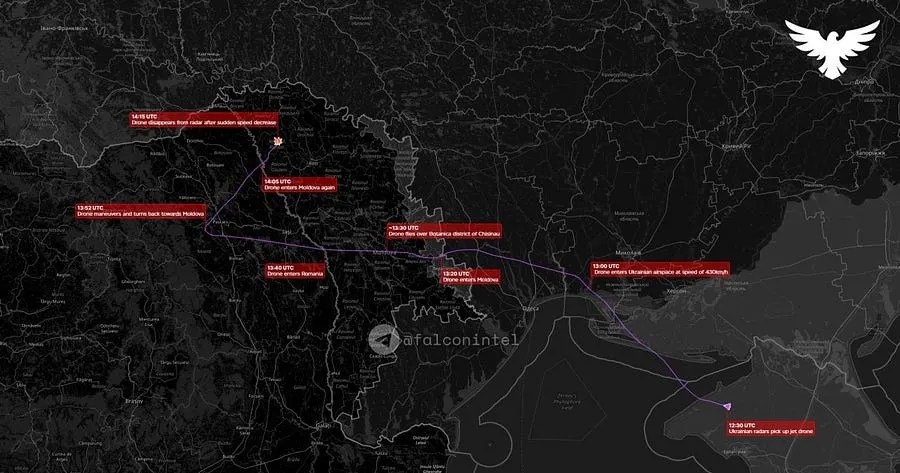
This is a map of the Russian drone flying across souther Ukraine to fly across central Moldova to fly for a half hour over Romania, unmolested by NATO air defenses, before returning to Moldova. (Image: @falconintel)
On Tuesday, as noted above, there was a big Russian missile+drone strike that blew stuff up and killed and injured Ukrainians, in an actual war.
The same day, two other things happened in NATO-land. First, a Russian jet-powered drone flew across half Ukraine, into Romania, flew around Romania in NATO air space for a half hour, and then returned to Moldova. The expedition covered about 500 kilometers (310 miles). It was quite the excursion, almost to the Carpathian Mountains.
NATO launched a pair of Spanish F-18s. No intercept. We don’t know why, but, last review courtesy the Polish media, we learned that the previous time NATO failed to intercept a Russian attack weapon flying in NATO air space – this happened to be a cruise missile – the Polish F-16s that should have carried out that intercept had trouble, because the spiffy high tech data link with the NATO AWACS “flying radar” watching every meter the Russian cruise missile flew, wasn’t working so ground controllers had to try to vector the pilots to the missile. It didn’t work. The malfunctioning data link system is called Link16, unsurprisingly first developed for the US Air Force. So maybe that was a problem for the Spaniards.
The other, even more humorous (some might say shocking) NATO development that day, was that Romania and NATO were simultaneously conducting two (!) major air exercises requiring air watch and so forth. It’s not like the drone flew into Romania and all of NATO’s air watch stuff was elsewhere. Based on Ukrainian sources, at minimum, the air operations training involved six NATO fighter jets, an AWACS, two fuel tankers, a recon drone, and a maritime search plane.
This produced the, I don’t know, ironic, maybe entertaining, and according to some probably negligent situation of all manner of NATO aircraft zooming and buzzing above eastern Romania and practicing defending NATO air space against any and all air threats, while, at the exact same time, about a 15-20 minute F-16 flight to the north (faster if on afterburner) an actual Russian drone with an explosive warhead was putt-putting across central Moldova and then well into central-eastern Romania, dozens of kilometers inside NATO air space, without anything stopping it. Here’s a link to a detailed article on that fiasco.
As an afternote it’s worth mentioning that all this seemingly almost intentional NATO air force energy spent not actually doing its job and defending NATO air space, over southeast Romania and the western Black Sea, took place simultaneously with the first day of the punishing Ukrainian drone raids against the Anapa, Sochi and other points in the Kuban. Some Russians might say the exercise was just a cover for nefarious NATO data-gathering on targets for the Ukrainians. I think that’s silly but the theory is out there.
Next day, so second day of those strikes, NATO flew a deep reconnaissance mission over the Black Sea that did a fairly close fly-by of Crimea and flew suspiciously close to Russia’s Black Sea coast where, as we knew, only hours before a salvo of Ukrainian Neptune anti-ship missiles had hit and to all appearances pretty solidly damaged tree to five Russian warships in the vicinity, including two missile launch platforms. The NATO recon mission, flown by an RAF Rivet Joint spy plane, had every appearance of NATO checking out the degree to which the beating the Ukrainians had laid down on the (remains of) the Russian Black Sea Fleet, would be long-lasting.

This is open source tracks of NATO reconnaissance flights around the Black Sea on Wednesday, following a major operation on Tuesday that gave NATO airmen plenty of good training but failed to do anything about a Russian war drone flying over Romania for about a half an hour.
Those darn Russian “Partisans” and long Ukrainian memories
The probable SBU/HUR bloggers that are probably masquerading as a Russian partisan movement on Tuesday put out a list of claimed assassinations for the past month. Only one murder could be confirmed by other sources, but the list is worth taking a look at. This won’t affect the course of the war overly, but again, anyone thinking the war can just be ended by a neat ceasefire after which everyone goes back to playing nicely and buying cheap Russian energy, has no understanding how vicious the Russians have been in Ukraine and how dead set the Ukrainians are on hunting down responsible individuals and killing them.
- On July 27 SBU assassins in Donetsk killed Oleg Shutov, an assassin himself employed by the special services division of the DPR. The Ukrainians had been after him for the June 27, 2017 murder, in Kyiv, of Maj. Gen. Maksym Shapoval, commander of the 10th special forces detachment. Shutov also reportedly was involved in a March 31, 2017 murder, in Mariupol, of the head of the counterintelligence department of the SBU in the Donetsk region, Col. Oleksandr Kharaberyush. Some of us remember that. The SBU said it surveilled Shutov for several days before blowing up his car. The SBU announced the assassination this week.

This is SBU imagery. On the left, General Maksym Shapoval, killed by a DPR assassin in 2017. On the right, DPR assassin Oleg Shutov, Shapoval’s murderer. The SBU killed Shutov in a car bombing on Jul. 27, they say. (Photos: SBU)
- On July 29, in Tula, Andrei Cherezov, head of the Russian Air Transport Laboratory and a fairly high profile supporter of the invasion as well as a player in Russia’s drone manufacturing effort, was ambushed in the entryway of his apartment building and shot and wounded with a pistol. Word is he was seriously wounded and is unlikely to recover. The shooter escaped. This was reported in some media.
- On Aug. 5, in Sverdlovsk, Vladimir Tkachuk, another drone manufacturer and simultaneously host of a rah rah Russia Telegram channel called “Obsessed with War,” was blown up in his car. He survived but lost limbs and the function of major organs, reportedly he’s in a local hospital in vegetative state. The bomber wasn’t caught. Part of this was reported in some Ukrainian media.
- On Aug. 27, Aerospace Forces Lt. Col. Sergei Sechkov died in a car bombing in St. Petersburg. Reportedly the woman who planted the bomb escaped to Moldova via Turkey, and traveled onwards. The Russian police supposedly know the identity she crossed the borders with, but not much else. This was pretty thoroughly reported in Ukrainian media and even mentioned by Russia milbloggers.
- On Sept. 3, Aerospace Forces Maj. Gen. Nikolai Varpakhovich, commander of a long-range bomber division, was shot near his home as he was getting into his car in Engels. This is the home base of bombers that launch cruise missiles at Ukraine; by almost any logic he is the senior officer signing off on the strikes. A motorcyclist driving up to his car shot him twice, once in the face and once in the stomach. He survived and reportedly was airlifted to Moscow for intensive care. The motorcyclist escaped. According to Russian media the general was possibly injured in an accident.