


September 23, 2026

SOUTHERN UKRAINE — Assembled in the space of minutes by the red light of a dozen headlamps, the drones look like something caught between two ages of aviation a century apart.
The old-school silhouette and rudimentary petrol engine, which sputters into life when the wooden propeller is turned, hark back to the early fighters of the world wars.
But lacking a pilot on board, and operated from a control room anywhere in Ukraine via satellite internet coverage, the aircraft also sits at the forefront of modern drone warfare.
This is the Zozulia, a heavy suicide drone operated by the 422nd Unmanned Systems Regiment, an elite Ukrainian drone unit operating over the vast open steppes of the southern front line.
Thirty-one-year-old crew member Honey Badger, who spent years flying smaller drones much closer to the front line, goes about his work with an undying zeal.
“Now it’s all a lot easier, our logistics and the work itself are much better at a distance,” he said, “we have new drones, which carry nice big bombs and don’t lose signal.”
“We can’t fight any other way, we need to turn on our creativity. We don’t have the resources, so we need to find new ways of getting through.”
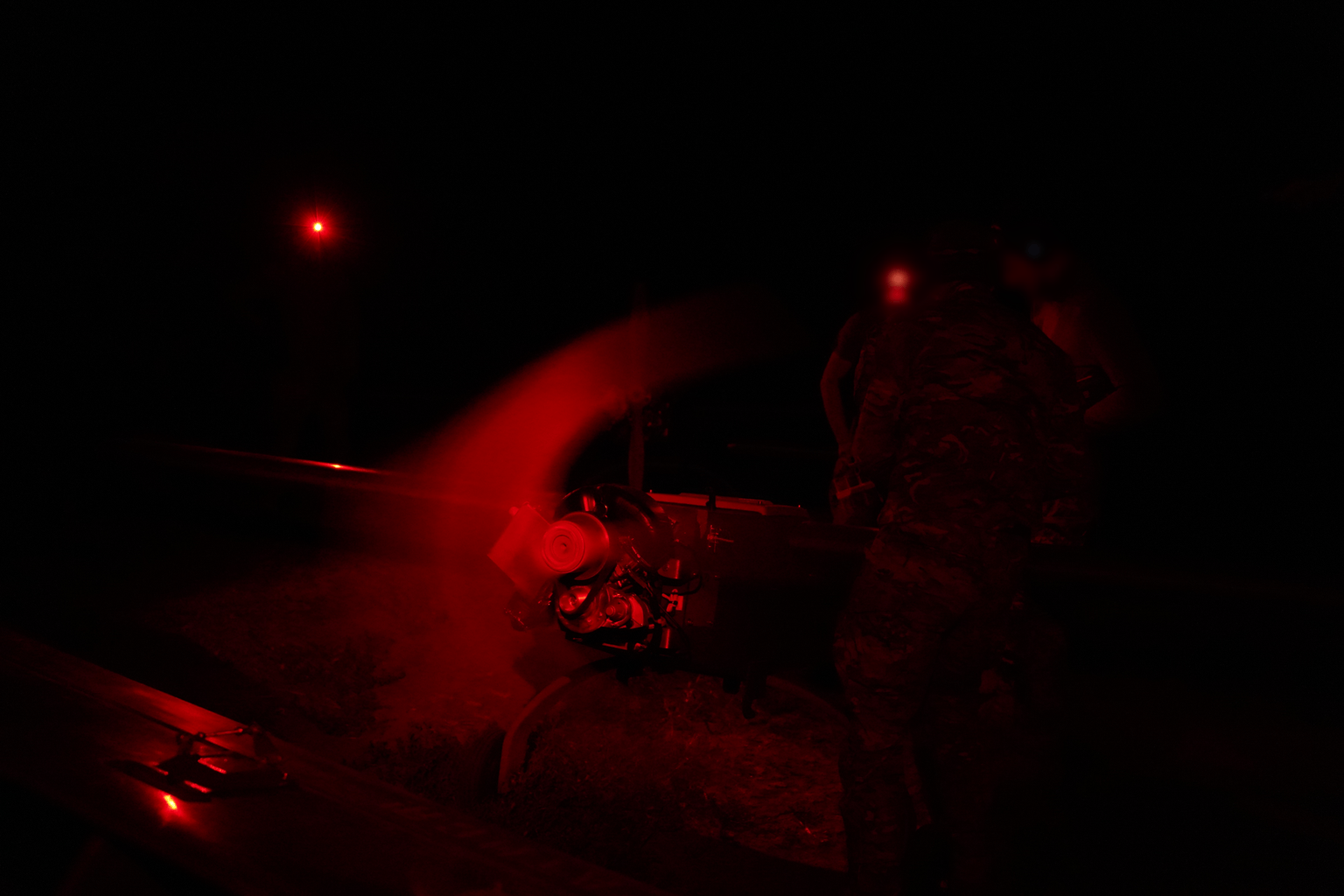
The Zozulia — manufactured by Ukrainian company Warbirds — is just one of several drones that the regiment operates in the so-called “middle strike” range, where Ukraine has advanced in leaps and bounds over the last year.
The term “middle strike” didn’t exist before Russia’s war against Ukraine, but is now used to describe a range covering everything from the end of first-person view (FPV) drone range at around 35 kilometers behind the zero line, to the beginning of so-called “deep strike” range at about 300 kilometers.
Over spring and summer 2026, backed by refined technology and a surge of state procurement, Ukraine’s elite drone units dramatically expanded their middle strikes, both in scope and in scale.
Videos of Ukrainian drones patrolling the highways and cities of Russian-occupied Ukraine in areas where long columns of enemy military vehicles had once felt safe, flooded social media.
Together with a stabilized front line and an escalating “deep strike” campaign against Russian oil and gas infrastructure, the middle strike campaign was a key pillar of Kyiv’s push to force a quick end to the fighting this year.
Since Moscow doubled down on its war effort, with jet-powered drones terrorizing the Ukrainian rear, while a brutal winter and likely mobilization of hundreds of thousands more troops loom, Kyiv’s middle-strike trump card has faded from the news cycle.
But on the ground, despite Russian efforts to adapt, the mid-range drones of units like the 422nd continue to chip away at Russian forces in the occupied south.
Going forward, with much depending on a constant technological arms race, Ukraine’s ability to maintain its upper hand in middle strike looks to be crucial for the long-term course of the war.
New hunting grounds
With their engines tested, warheads armed, and navigation calibrated, the Zozulias are ready for launch.
One by one, the drones, each the size of a small car, are lifted onto a custom-designed catapult.
With all systems go, the crew takes shelter inside a nearby dugout as the drones are flung into the moonlit sky. From here, they will be piloted via satellite internet by operators who could be anywhere in Ukraine.
Unlike most elite drone units of similar size, which are mostly under the umbrella of Ukraine’s Unmanned Systems Forces, the 422th Regiment is part of the Ground Forces, fighting directly under the command of the 17th Army Corps, which holds a crucial sector of the southern front line.
Part of the regiment is dedicated to supporting the corps’ brigades on the immediate front line with tactical FPV and heavy bomber teams.
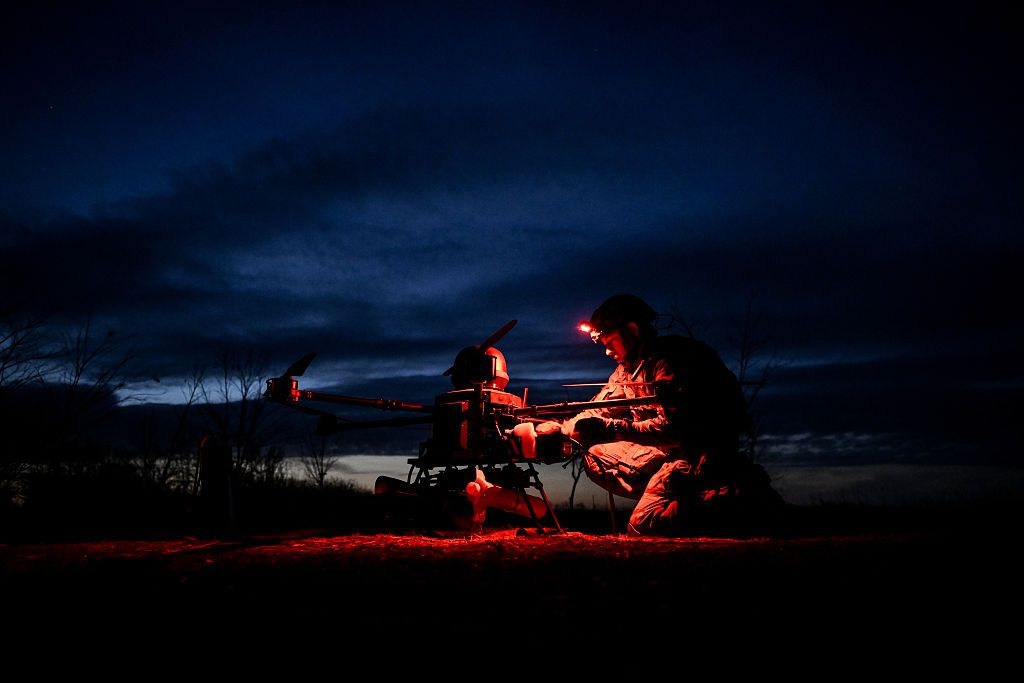
But where the unit really shines, commander Mykola Kolesnyk — callsign Tyson — told the Kyiv Independent, is spotting and striking targets deep past the front line, in operational depth.
“For me, the most important recognition of our work is how serious of a problem the enemy treats us as,” he said.
The 422nd regiment operates three classes of “middle-strike” drones.
Seeing the success of Russia’s Lancet drone over 2023, Ukrainian defense companies began developing their own X-wing loitering munitions.
Two of them, the Ram-2X and Bulava, are used by the regiment, each paired with a fixed-wing reconnaissance drone (Shark and Leleka respectively) that acts as a spotter and radio repeater.
But what really opened up the Russian rear was the U.S.-built Hornet, a product of ex-Google CEO Eric Schmidt’s company Perennial Autonomy.
Sold at a price point of around just $5,000 and equipped with a Starlink terminal, Ukraine’s Hornets have swarmed Russian logistics routes en masse, hitting fuel transporters, supply trucks, and other military vehicles on a daily basis.
“The Hornet showed itself particularly well in terms of its value for money,” said Tyson. “This is the main weapon for controlling the highway from Russia to Crimea.”
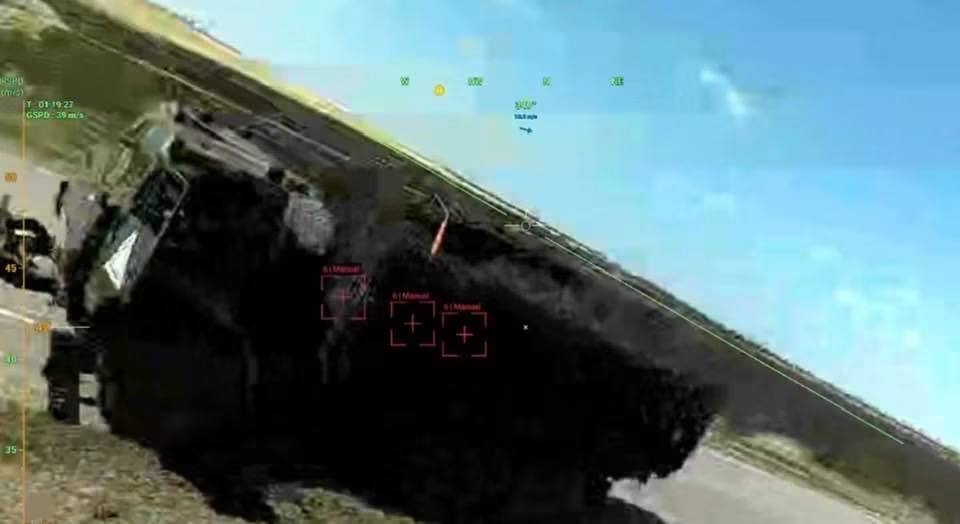


A compilation of screenshots from Hornet strikes by the 422nd Unmanned Systems Regiment in Russian-occupied southern Ukraine. (422nd Unmanned Systems Regiment / Telegram)
With Russia relying on just one main highway — the E58 — for its logistics in the area, and with few forests or urban areas to hide high-value targets in, the vast open steppes of Russian-occupied southern Ukraine have proved a fruitful hunting ground for the 422nd Regiment’s middle strike drones.
While Russian lines haven’t collapsed, consistent fire control of rear areas and logistics routes makes getting any of the key resources needed to fight — fuel, ammunition, food, and soldiers themselves — much more difficult.
“It’s not just about exerting pressure: we have practical fire control up to 50 kilometers behind the front line,” said Tyson.
“Practically, any serious movement has been stopped, and supplies to the front line have gotten a lot harder.”
Then, there is the Zozulia, which carries a 50-kilogram warhead 300 kilometers and beyond, and is designed to damage large static targets like substations, depots, and command points.
“As soon as I saw the results of the first strikes from this drone, I knew that at least for a while, this would be king,” said Zozulia crew commander Vakhabit.
“When you can fly up to 300—400 kilometers into the enemy and beyond and hit a target within a meter radius, the results speak for themselves. This is the future.”
Countering the countermeasure
In the weeks following the scaling up of the middle strike campaign in the south, Russian forces responded, changing logistics routes and deploying new countermeasures.
Russian military columns with high-value targets are now often accompanied by mobile fire groups, some posted on the vehicles themselves and some at regular intervals along key logistics routes.
Meanwhile, Russia’s elite Rubicon drone unit began posting dozens of videos showing Hornets and other middle-strike drones being downed by their interceptor teams.
“With all of their mobile fire teams and interceptors, they have begun to down a certain percentage of our drones, but it has not brought about any critical changes for our work,” said Tyson.
According to the commander, Russia’s redeployment of top drone interceptor teams in the rear to protect the highways has in turn allowed more Ukrainian fixed-wing drones — both strike and reconnaissance — to fly uncontested past the front line.
As for the mobile fire teams, the nimble and expendable Hornets fielded by Ukraine are more than capable of engaging the highway’s guardians first.
“Mobile fire groups are our number one target,” he said, grinning as he revealed how on the same morning, his regiment’s Hornet had successfully engaged a Russian mobile fire team on the E58 highway.
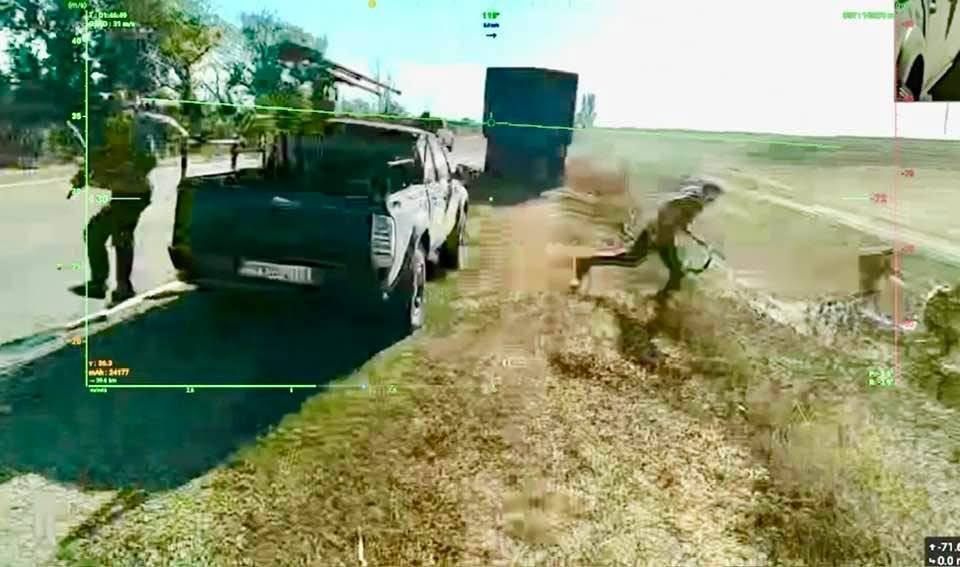
Going forward, with Russia’s jet-powered drones wreaking havoc on the Ukrainian rear and with a new revolution in AI-powered drones just over the horizon, the 422nd Regiment’s commander argues that a calm head and a will to do better can be decisive.
“War is not a craft of emotions, it is one of concrete numbers, of concrete dynamics,” Tyson said.
“The numbers tell you clearly if you are improving your results or falling behind. Those who pay attention see what is going wrong, make conclusions, and look for what needs to change to stay ahead of the enemy.”
The fault in our stars
While Ukraine — from high command to the units on the ground — prepared to unleash its middle-strike campaign over spring 2026, there was one decision that set the tone for much of the year.
In early February, after a spate of Russian attacks on highways deep in the Ukrainian rear with Starlink-enabled drones, SpaceX CEO Elon Musk cut off Russian forces from the technology by introducing the mandatory registration of Starlink terminals through Ukraine’s Diia government app.
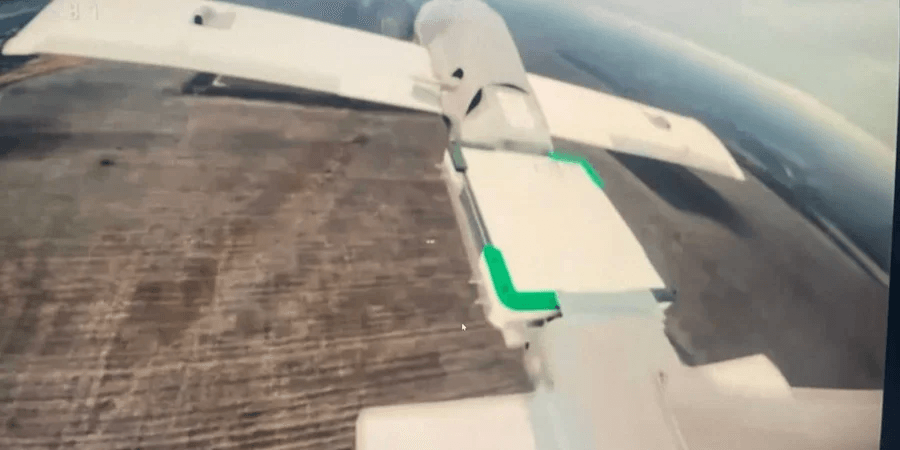
Over 2026, Kyiv’s Starlink advantage, immeasurable in its total effect, likely played a key role in the slower pace of Russian advance across the front line, Tyson argued.
“As much as the Russians complained about the West, they got so hooked on Starlink that when it was turned off they lost all their command for a short time,” he recalled.
But just as with previous front-line “gamechangers,” Russia, in response, has looked for ways to level the playing field.
Russian fixed-wing drones, from the cheap, tactical Molniya to the long-range Geran-class, are increasingly being fitted with decentralized mesh radio modems, allowing them to better maintain connection and provide a live video feed even in areas with dense electronic warfare active in the Ukrainian rear.
In 2026, Russia announced the launch of its own Starlink-equivalent satellite internet system, known as Rassvet.
The rollout of the network has been plagued by setbacks, with one of the satellites reported having fallen out of the sky and others failing to reach their intended orbits.
But if Rassvet can eventually become fully functional, it will offer Russia something Starlink doesn’t: unrestricted use, independent of the whims of foreign governments or tech billionaires.
In the meantime, Russia has also moved to counter Ukraine’s Starlink drones directly with a new class of electronic warfare system, designed to jam the unjammable.
In the first such operation made public, the 422nd Regiment, together with the Security Service of Ukraine’s (SBU) Alpha special forces center, destroyed a Russian Starlink jammer in June.
In the video posted by the regiment on Telegram, an array of large rectangular trucks can be seen in the night video feed of a Zozulia before going up in flames.
Russia is currently experimenting with several models of such jammers, the most prominent being the Peresvet-M, which according to presidential innovation advisor Serhii “Flash” Beskretnov, works by flooding the “uplink” channel emitted by the Starlink terminal on a drone.
In its current form, the system can deny Starlink connectivity across an area of around 20 square kilometers, and has been deployed to protect key targets in Crimea, Beskretnov added in a Sept. 4 interview.
Since the first operation, Tyson said, his unit has taken part in destroying at least five such systems, which remain bulky and vulnerable due to their massive power supply needs.
“Two weeks ago, they brought out the jammers in a new configuration, moving power supply from generators to the electricity grid,” the commander said.
“Only one time did we really feel their effect, and since we destroyed those systems, our connection has been unbroken. For us and our partners in the special forces, this is a top priority, to make sure a system like that doesn’t get in the way of all our other work.”
For now, Tyson said, it remains unclear whether Russian Starlink jammers will come close to properly denying Ukrainian drones easy access to targets at the middle strike depth.
“There are two ways this could develop. One where they will scale this up as much as possible to really cause problems for our Starlink systems,” he added.
“The other scenario is where this is practically speaking not much more than an information operation, carried out in the hope that we all start to panic. The most important thing is not to make predictions, but to watch and analyze the enemy closely.”