

April 27, 2026
U.S. Vice President JD Vance in April openly praised the Trump administration’s decision to halt direct U.S. weapons transfers to Ukraine — a statement that drew criticism and highlighted his skepticism toward Kyiv.
“It’s one of the things I’m proudest… we’ve told Europe that if you want to buy weapons, you can, but the U.S. is not buying weapons and sending them to Ukraine anymore,” Vance said at a Turning Point event.
His comments immediately drew backlash, coming at a time when Russia continues daily strikesagainst Ukrainian cities and infrastructure. U.S. Representative Marcy Kaptur said the policy shift effectively benefits Moscow.
“Not good for America. Not good for Europe. Not good for Ukraine. This is only good for Russia,” she said in a statement.
At the same time, as the Kyiv Independent has learned, Vance is not merely echoing the Trump administration’s foreign policy — he is actively shaping it.
Vance has emerged as one of the key voices influencing Washington’s approach to Ukraine, according to sources familiar with internal discussions.
A worldview formed before the war
Vance’s criticism of Ukraine did not begin in office.
Long before his now-famous Oval Office clash with President Volodymyr Zelensky, he had already positioned himself as a skeptic of U.S. support for Kyiv.
In early 2022, as global attention focused on the growing threat of all-out war against Ukraine, Vance — then a Senate candidate — dismissed the issue in stark terms.
“I gotta be honest with you, I don’t really care what happens to Ukraine one way or another,” he saidduring an interview.
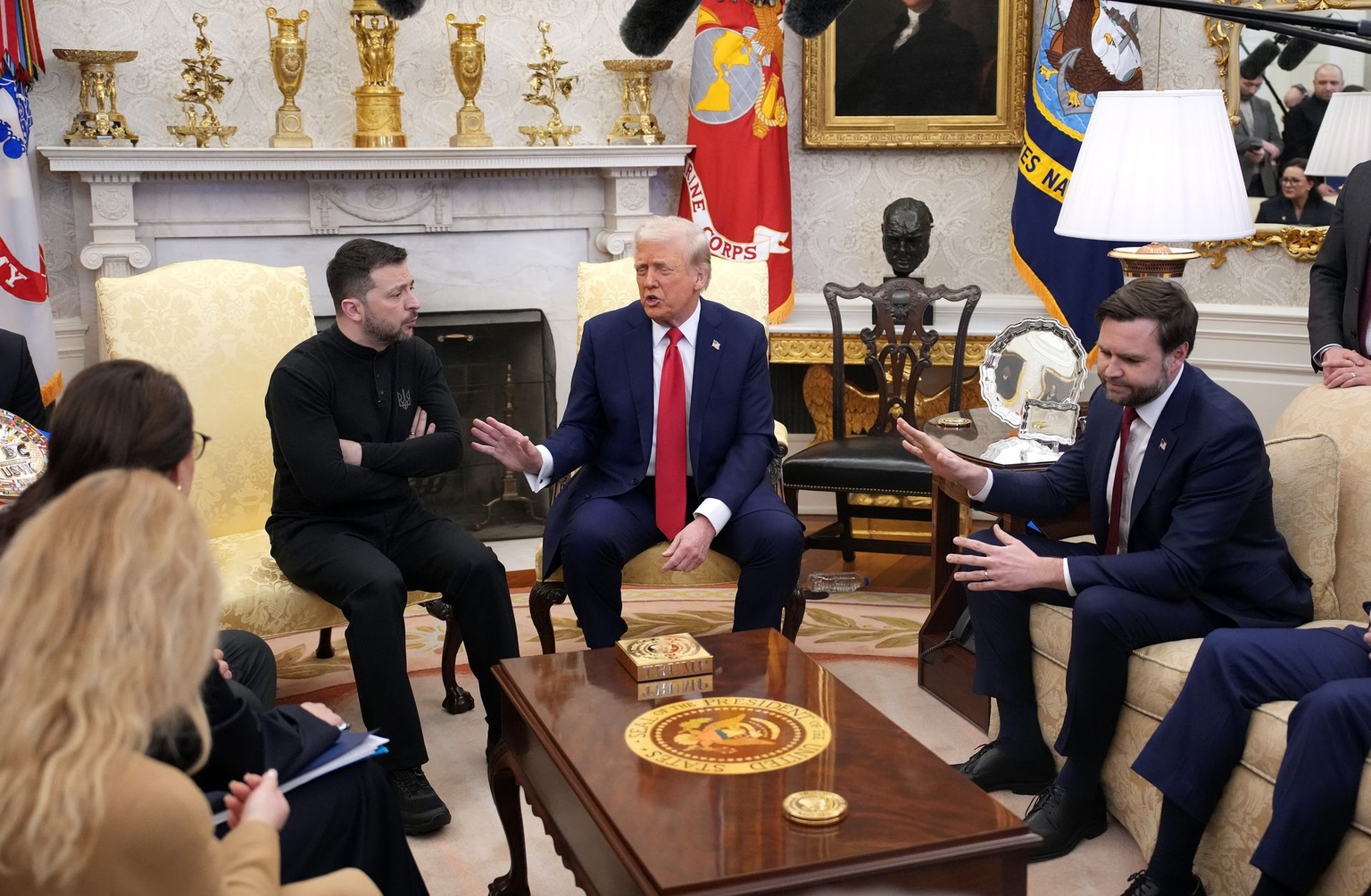
The comment, widely criticized at the time, captured a core element of Vance’s thinking: Ukraine, in his view, does not represent a U.S. national interest.
From the earliest days of Russia’s war, he has framed the biggest conflict in Europe since World War II as a burden on American resources.
Vance has criticized the scale of U.S. assistance approved under former President Joe Biden, while saying NATO allies have failed to shoulder enough of the burden.
This framing has become a central pillar of Vance’s foreign policy identity.
Contrasts within his own circle
At the same time, Vance’s stance on Ukraine stands in stark contrast not only to U.S. allies but also to members of his own family and closed circle.
His cousin, Nate Vance, traveled to Ukraine in March 2022, initially to deliver humanitarian aid before joining Ukrainian forces. Over three years, he fought in some of the war’s most intense battles as part of the Da Vinci Wolves battalion.
Speaking to the Kyiv Independent, Nate Vance said he disagreed with the vice president’s earlier remarks about “not caring” about Ukraine.
“It’s fair to say that I don’t agree with that statement,” he said. “But you have to take that comment in context. He was not a politician yet. It’s politics.”
Similar divergences also appear within Vance’s broader professional circle.
Daniel Driscoll, U.S. Secretary of the Army and a close ally of Vance — and his former Yale Law School classmate — has taken a more supportive tone on Ukraine.
“The U.S. Army has stood by and stood with the Ukrainians from the very first day of the war,” Driscoll said on April 16. “They have done an absolutely amazing job of innovating. And I am publicly on record saying we are learning a lot from them.”
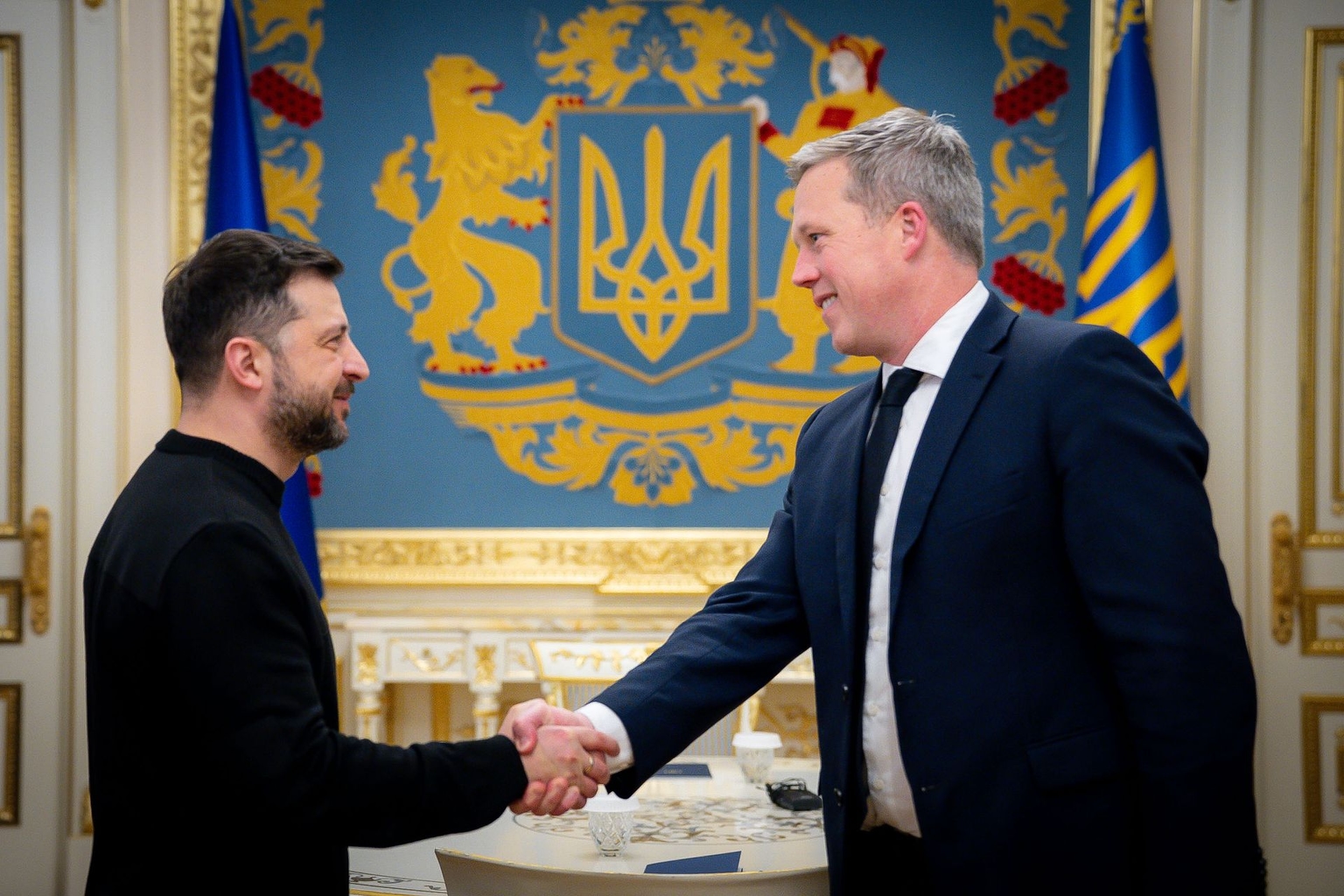
Back in December, Driscoll, who was appointed on Vance’s recommendation, traveled to Kyiv and even took part as a U.S. negotiator on Ukraine.
This difference between Vance’s remarks and senior military views points to deeper internal disagreements over Ukraine’s status as a U.S. ally.
An influential voice
Vance’s influence on U.S. foreign policy extends beyond rhetoric.
According to White House officials, Vance plays a meaningful role in shaping internal policy discussions, including those related to Ukraine.
White House spokesperson Olivia Wales described him as an important figure in the administration’s diplomatic efforts.
“President Trump has an extraordinary national security team… who are all working together to end the war between Russia and Ukraine,” she told the Kyiv Independent.
“The Vice President has always been a trusted voice on all foreign policy topics — from working to end the senseless killing in Russia and Ukraine to leading negotiations with Iran. (Vance) is an invaluable member of the president’s exceptional team.”
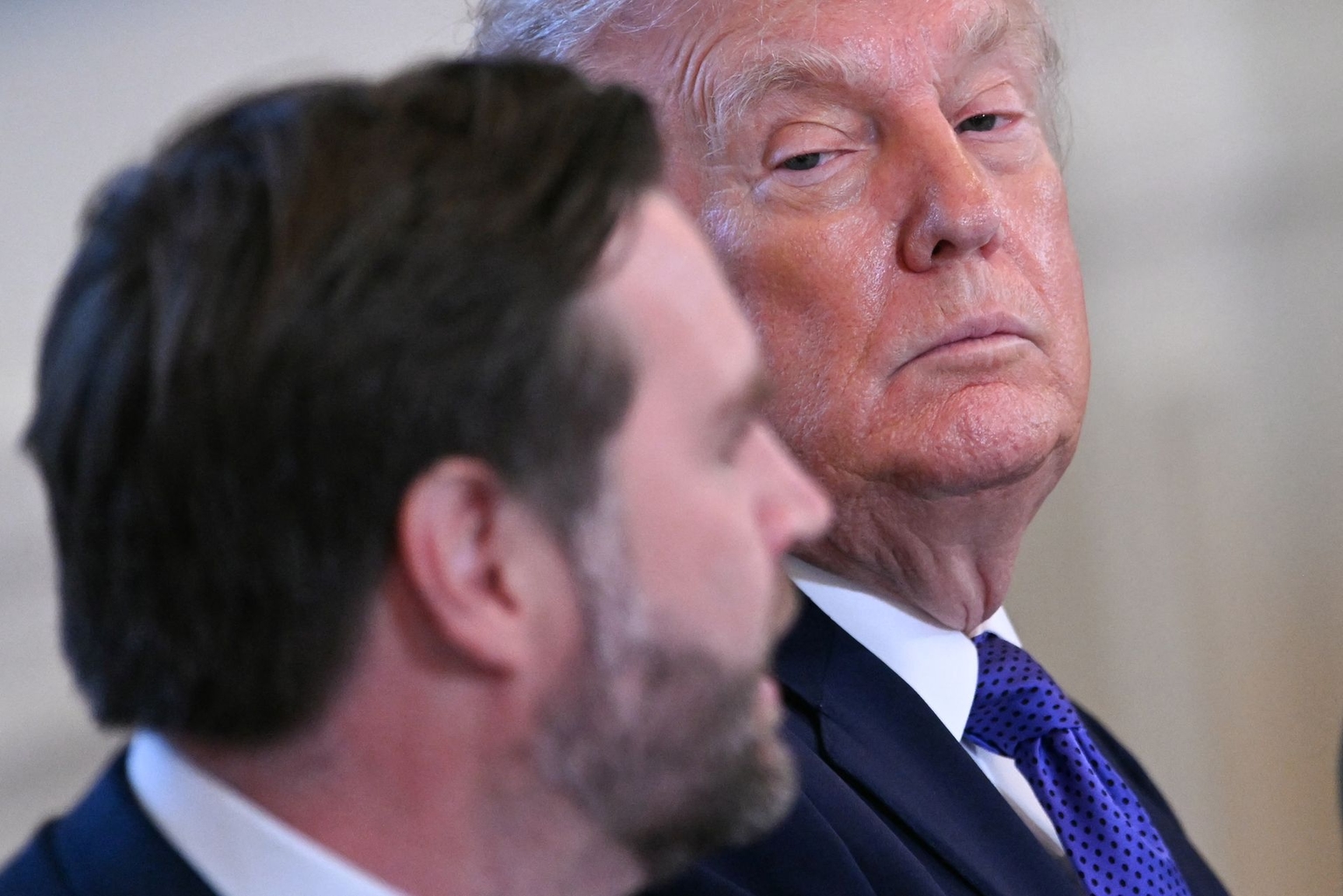
Another person confirmed that Vance also takes part in post-session debriefings following U.S.-mediated peace talks involving American officials.
Still, this raises a broader question: what shapes Vance’s views on Ukraine?
Not simple isolationism
Analysts argue that his position cannot be reduced to simple isolationism.
Samuel Garrett of the U.S. Studies Center at the University of Sydney said Vance’s views reflect a more selective approach to U.S. engagement abroad.
“It is easy to label JD Vance simply as an isolationist. Yet his previous support for military aid to Israel and Taiwan suggests that it is not so simple,” Garrett said.
“His criticism of Ukraine and Europe appears more personal and rooted in his narrow view of U.S. foreign policy interests.”
Analysts say Vance’s rhetoric is aimed at a domestic audience. Majda Ruge of the European Council on Foreign Relations argued that his comments on ending weapons deliveries are intended to strengthen his standing with the MAGA base.
“Since he couldn’t steer the administration away from conflict with Iran, he’s using the Ukraine issue to re-establish himself as the true voice of the anti-war right,” she said.
At the same time, experts say his position ultimately points toward a broader strategic goal. Ruge added that Vance has long favored a diplomatic reset with Moscow.
“He has consistently pushed for a deal on Ukraine which would allow for a political and economic reset between the U.S. and Russia. This remains his position.”
……………….
Putin’s favorite American foreign policy idea
April 27, 2026
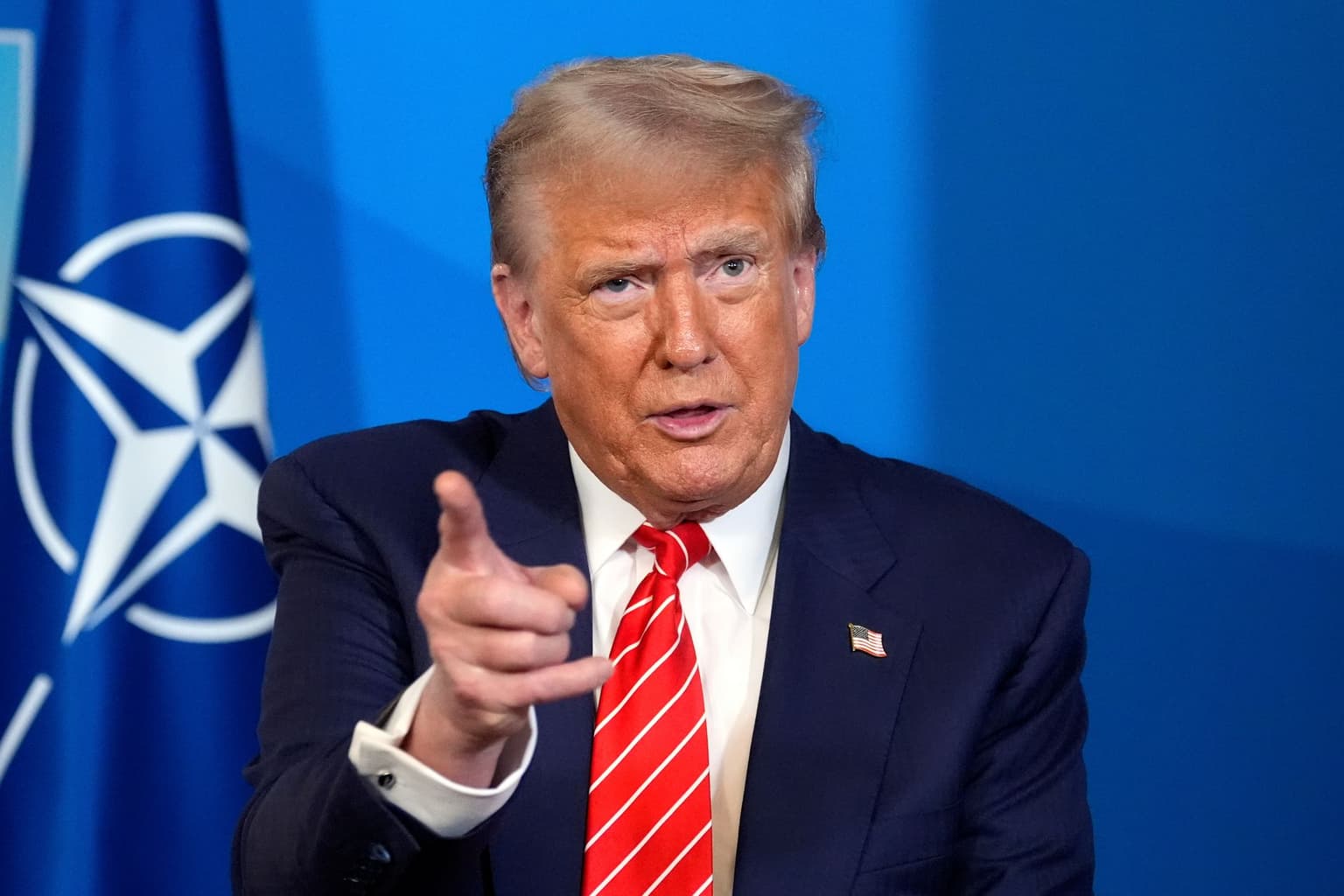
U.S. President Donald Trump in The Hague, Netherlands, on June 25, 2025. (Alex Brandon/AP Photo)
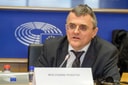
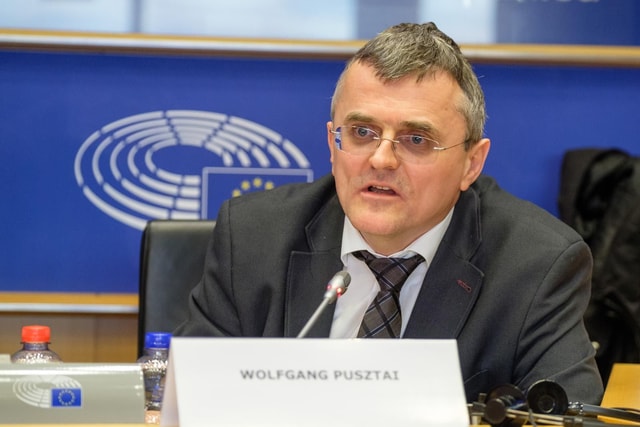
Wolfgang Pusztai
Security, defense, and policy analyst
U.S. President Donald Trump has repeatedly attacked NATO.
In one of his latest publications on Truth Social, Trump said the alliance is a “paper tiger” without the U.S. and criticized NATO allies for not backing the American operation in Iran.
In response, Spain’s Foreign Minister, Jose Manuel Albares, called for the European Union to create its own army and strengthen defense integration. His comments underscore that there are a few questions officials in European capitals continue to be preoccupied with: Will Trump leave NATO? Are American security guarantees to Europe still reliable?
Of course, the U.S.’s commitment to NATO is not without self-interest. NATO offers the U.S. many key advantages. American NATO membership allows the U.S. to dominate a huge defense market, particularly because U.S. industry usually drives NATO technological standards.
NATO is a tool for containing Russia‘s influence, not only in Europe — a fact that the Trump administration may be underestimating — but also in the Arctic and the Pacific, both of which are becoming increasingly important to the U.S.
NATO provides the U.S. with a pool of interoperable partners for military operations around the globe, such as those in Iraq, naval operations in the Red Sea, and off the coast of Somalia. However, as Trump has stressed, the Europeans are by and large absent from the Iran war, which is certainly a mistake, as security policy should be driven by interests and not by emotions.
American access to NATO territory provides a significant geostrategic advantage by increasing strategic reach and enabling forward bases for global operations, including Ballistic Missile Defense and Anti-Submarine Warfare.
Currently, while some European countries, such as Spain, have prohibited the use of their airspace for missions related to the war in Iran, American bases and harbors in Europe provide irreplaceable logistical support for operations.
More than 20 heavy U.S. bombers are currently based in the U.K. Without access to bases in Europe, any large American military operation in the Middle East would be extremely challenging, if not impossible.
Overall, it does not make sense for the U.S. to withdraw from NATO. Moreover, according to the National Defense Authorization Act 2024, no president may withdraw from NATO without a two-thirds vote of the Senate or an act of Congress. Therefore, President Trump simply cannot unilaterally decide to withdraw from NATO.
NATO’s mutual defense, enshrined in Article 5 of the NATO Treaty, is ensured not by ink on paper, but by boots on the ground. During the Cold War, the “layered cake system” of allied forces in Germany and the “Allied Mobile Force” for the alliance’s northern and southern flanks guaranteed American soldiers’ participation in the defense against potential Warsaw Pact aggression from the outset and thus American involvement in the war.
Today, the forward presence of American troops and those of other key NATO nations on NATO’s eastern border serves the same purpose. As long as U.S. troops are stationed in Eastern Europe, Moscow knows that America’s commitment to defending its European allies is serious.
Without a doubt, Europe needs to significantly strengthen its defense capabilities, particularly in missile and drone defense, early warning systems, and long-range strike capabilities.
Additionally, it must bolster its intelligence, cyber, and space assets. Ammunition stockpiles must be greatly increased to sustain a prolonged conflict. While all this will not happen overnight, the sooner research and development in these critical areas are boosted, the sooner equipment can be procured.
Consequently, Europe will not only need the American nuclear shield for the foreseeable future, but also other key capabilities. It would be dangerous for Europeans to signal to Washington that they no longer count on the U.S. and will replace NATO with a common European defense.
Without a physical presence of forces, compliance with security guarantees should not be taken for granted, and Europe’s military capabilities will remain limited for the foreseeable future. Both of these factors also have significant implications for Ukraine.
American security guarantees would likely deter Russia, but only if American troops were permanently stationed in Ukraine, which is highly unlikely.
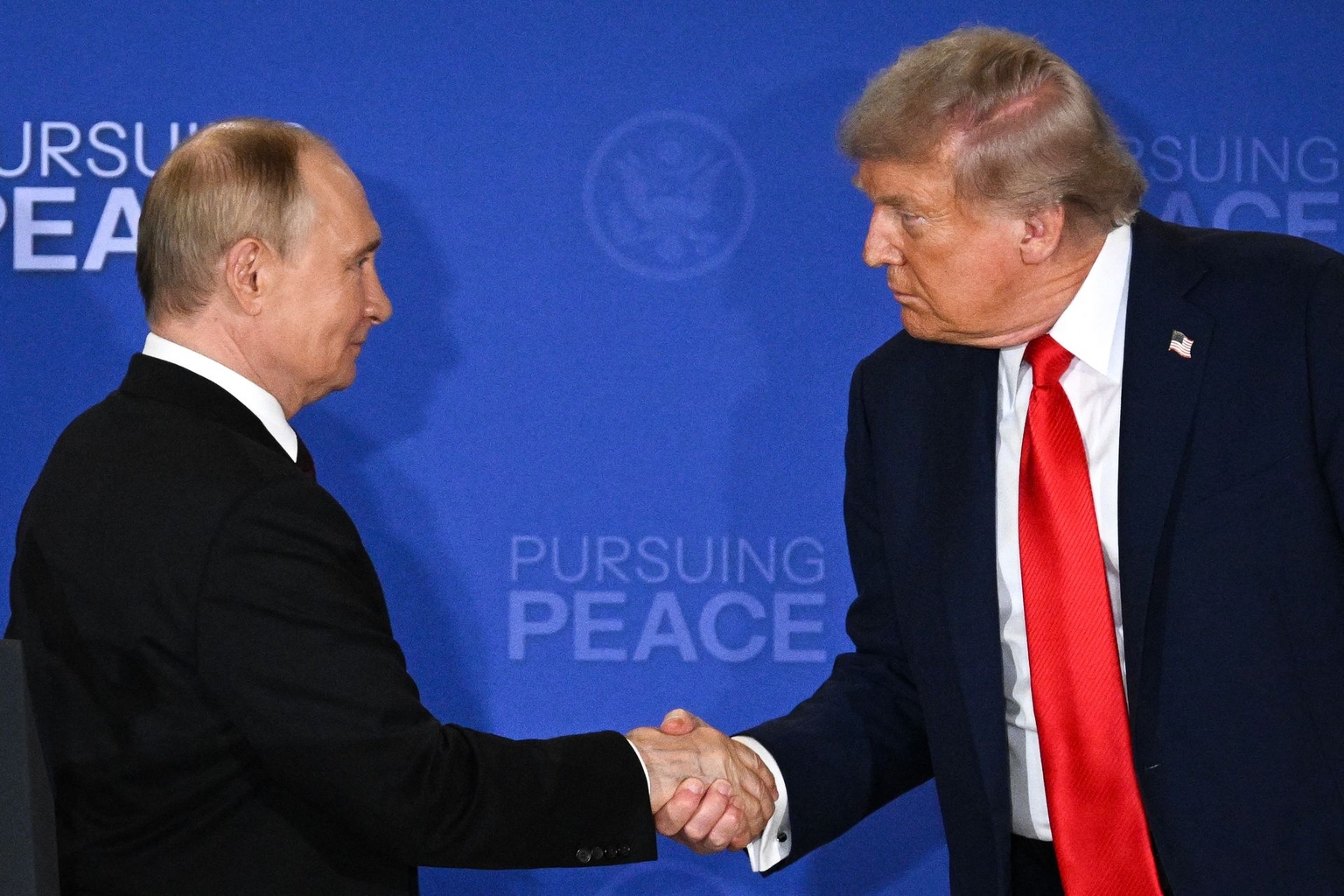
A security guarantee solely from Europe would most likely not scare off Putin, simply because the Europeans lack military credibility.
Moreover, if there were no European troops on the ground in Ukraine near the front lines, it would be questionable whether these guarantees would be honored in case of necessity, especially as Europe is defenseless against missile attacks and very vulnerable to Russian mass drone attacks.
Realistically speaking, it is unlikely that the leading European powers would seriously risk a major European war in the event of renewed Russian aggression against Ukraine that could heavily damage their own countries.
Consequently, while American and European security guarantees are undoubtedly important for Ukraine, the most reliable and effective way to deter Russia after a ceasefire is to rapidly build up strong, modern armed forces, including a “Ukrainian Iron Dome” and a powerful air force capable of striking long-distance targets.
Editor’s note: The opinions expressed in the op-ed section are those of the authors and do not purport to reflect the views of the Kyiv Independent.
Once VanZkov had said the magic words :
“I don’t care what happens to Ukraine one way or another”, he was a shoo-in for VP. Especially once that other nazi Fucker Karlsonov had declined the offer.
You have to be the lowest putinoid scum to get a top job; or indeed any job, with tovarisch Krasnov.
Spain and the UK should demand the full withdrawal of the U.S. from their bases in those countries.
If Krasnov wants to keep them, fine : then start supporting Ukraine unequivocally and sack scum like Vance, Gabbard etc.
The author of the OpEd is Wolfgang Pusztai, an Austrian. He sounds like a solid guy.
It’s good to find an Austrian that is fully supportive of Ukraine.
Now that Merz is acting as Krasnov and putler’s wing man; demanding capitulation in return for : nothing at all, it truly is time for civilised nations to step up fully and help Ukraine comprehensively.
That means a doubling of weapons support at the very least. On top of the £90 billion loan, which barely scratches the surface.
Who knows for how much longer the U.S. will be in the grip of the Putin wing of the GOP?
Every extra day is just agony for Ukraine.
Why isn’t there a law that states that an elected leader of a democracy should not decline to help a fellow democracy that is under attack from a genocidal facist power?
Similarly it should be illegal to lie and propagandize on behalf of the interests of a genocidal fascist power.
Anyone wishing to obtain a U.S. visa for business or leisure is required to sign a declaration that they have never collaborated with or supported naziism.
Well naziism is alive, well and even more virulent than before.
No ruZZians at all (excepting known liberal opposition to putler) should get into Europe or North America.
Ever.
Unquestionably, Mr. Makeupman is human trash, just like his orange boss.