


May 21, 2026

“Improving demography at the expense of foreigners is a path to nowhere”
Anti-migrant panic is not abating in Ukraine . Social networks and Telegram channels are pouring horror stories on Ukrainians about the alleged mass importation of foreigners, with whom they are supposedly planning to replace the indigenous Ukrainian population. This campaign has all the signs of a classic IPSO, from which the ears of Russian propaganda stick out. However, the fact that these narratives were enthusiastically picked up by Ukrainian media and politicians indicates that the fake has fallen on fertile ground. The topic of migrants and fear of foreigners is one of the oldest tools of manipulation, and even in quite wealthy Western countries.
Anti-migrant hysteria is fueled by statements from officials and employers. Ukrainian business is sounding the alarm: due to emigration and mobilization of Ukrainians, it is experiencing an acute shortage of workers, so no one is hiding their intentions to save the situation by attracting foreigners. In April, the head of the Presidential Office, Kyrylo Budanov, announced that the possibility of easing the current restrictions on attracting foreign workers was being considered. Budanov’s statement was one of the triggers that launched an avalanche of alarmist messages on social networks about the mass landing of foreigners in Ukraine as a fact. Some contributors went further: they claim that the replacement of Ukrainians by foreigners in the labor market is only the first stage of a “global conspiracy”, and later migrants who adapt in the country will displace the indigenous population altogether.
However, even despite Ukraine’s obvious demographic problems, official statistics do not confirm a “migration flood .” The number of work permits issued to foreigners has not even come close to reaching pre-war levels.
The head of the State Migration Service, Natalia Naumenko, believes that the current anti-migrant hype is a targeted Russian campaign. In an interview with Glavkom, Naumenko explains with figures why all fears about the influx of migrants to Ukraine are greatly exaggerated, describes the path a foreigner takes before getting a job in Ukraine, and tells why Ukrainian citizens are being expelled from the European Union.
“This whole story has its roots in Russian Telegram channels”
– Now many people give their interpretations of the topic of migration, but usually these assessments do not correspond to reality, – says Natalia Naumenko. – Quite often there is a statement that Ukraine will solve the demographic crisis by attracting foreigners: in particular, by making changes or developing a new strategy of state migration policy. In my opinion, we should be very careful about improving the demographic situation by increasing the number of foreigners arriving in Ukraine. This is a path to nowhere. Because by solving one problem, we can create a lot of others that we will not be able to overcome: when migrants do not understand at all where they are going, do not understand the culture of this country, we do not know where to settle them, and so on.
Many experts now say that Ukraine is in a terrible demographic crisis, from which it will not be able to escape for the next 50 years. But population aging is not a unique Ukrainian situation, but a global trend. All countries have faced it, except for a few – China, India and some African countries. And this situation has persisted, apparently, since the 60s of the last century.
In Ukraine, this crisis is deepening due to the war: many people, especially men, are at the front, and accordingly, many of them are falling out of demographic processes, the labor market, etc. But this situation needs to be resolved in a civilized way.
Now, actually, regarding what is being very systematically pushed on social networks, Telegram channels, and expert circles. Yes, the idea was thrown around that we need 300,000 migrants annually to eliminate the labor shortage in the market. But a counter question arises: has anyone ever done research on this topic – which industries are developing in our country and need additional labor, or how will our economy develop in the post-war period and what should we direct foreign labor to? Actually, then we will be able to make some predictions about how many workers and from which countries we need, what qualifications, etc.
We have analyzed what is currently happening on social media and are inclined to believe that this whole story has its roots in Russian Telegram channels. This is a Russian IPSO, which is aimed at somehow lowering the morale of our defenders who are at the front.
But our officials and employers are talking about the need to attract migrants and simplify procedures… So it’s obviously not just about the IPSO.
In fact, all these conversations started much earlier than the statements of the same Mr. Budanov . Now it has simply reached its peak. The hype over the topic of migrants in Ukraine began from the moment when many experts began to throw phrases about the fact that we need 300 thousand migrants per year. The arithmetic was approximately as follows: if 8 million citizens left Ukraine, then the same number of foreigners should come here, because Ukrainians will not return. Of course, these statements were not based on any research, so they should be treated, to put it mildly, very cautiously. The issue of migration is part of the national security block: it can be both a great benefit and a rather large risk. The state should know who is on the territory of the country, for how long, what they are doing here, and other cumulative factors.
Labor migration existed in Ukraine before the war, exists during the war, and will continue to exist after the war. This is an absolutely natural process that does not depend on the statements of experts or the opinions of politicians.
In pre-war 2021, 21,786 people had work permits in Ukraine, in 2023 this figure decreased almost fivefold – to 4,529 people. And only since 2024 have we observed a gradual restoration of this dynamics: in 2024, 6,127 permits were issued, in 2025 – 9,574, but this is still only 43.9% of the pre-war level.

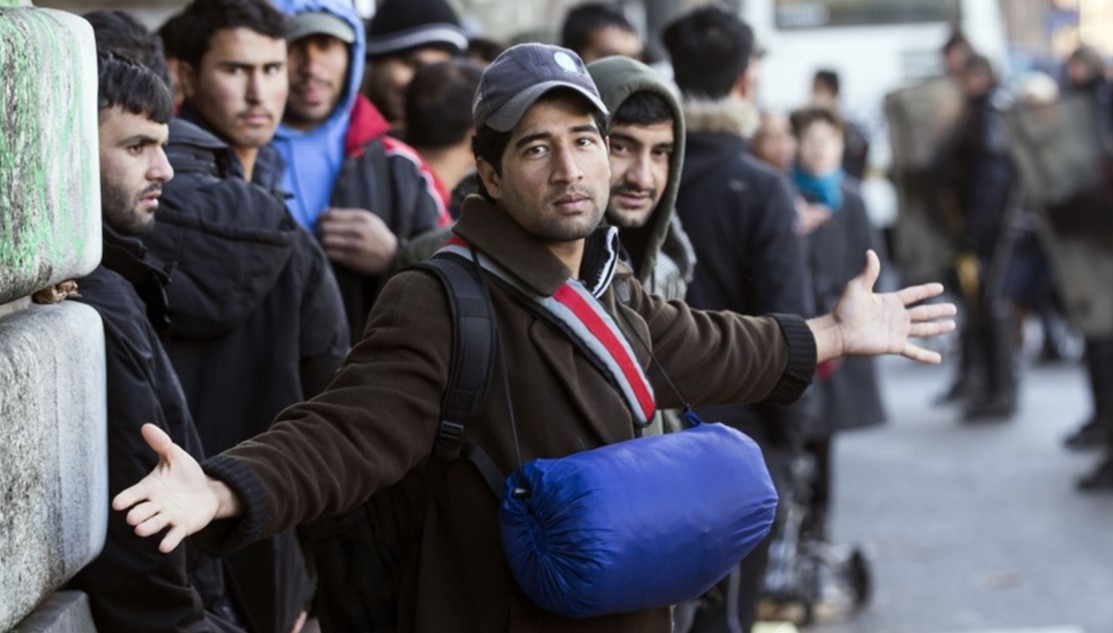
Migrant work permits in Ukraine are currently not even close to pre-war levelsphoto: El Heraldo de Saltillo
At the same time, it is necessary to understand: what is the attraction of a foreigner, especially during the period of martial law in Ukraine. If earlier there was a logical branched transport connection, when people flew to us by direct flights, now it is increasingly complicated. Today, in fact, the only window of entry into Ukraine is transit through Moldova. Moreover, Moldova is quite meticulous about granting transit visas, because they understand the risks for themselves.
The transit route through European countries to us is actually blocked, because European countries are afraid of migrants who are supposedly heading to Ukraine for work being left behind in the European Union. And there are grounds for such reservations: we communicate with those who are engaged in migrant recruitment, and they confirm these risks.
It should also be noted that the number of work permits issued does not mean that the corresponding number of foreigners are actually in Ukraine and working. Between the issuance of the permit and the actual arrival, the foreigner must go through three stages: issuance of a work permit – obtaining a visa and entry – obtaining a temporary residence permit.
To understand the real picture: if in 2025, employment centers issued 9,574 permits for the employment of foreigners, then only 4,975 people received temporary residence permits under these permits. That is, about half of those for whom permits were issued actually arrived in Ukraine and were legalized. The rest are either permits issued “in reserve” or those that were not implemented due to visa refusal. In the four months of 2026, the State Migration Service issued 1,733 temporary residence permits, which corresponds to the average monthly figure for 2025. The current volume of issuance of permits is 38.6% of the pre-war level (in 2021, 12,883 such permits were issued).

Even with a work permit, in order to enter Ukraine, a citizen of a country with which we have a visa regime must first obtain a type D visa – a national work visa. To do this, a person must contact the Ukrainian embassy in their country.
In reality, about half of the foreigners for whom permits were issued arrived in Ukraine and were legalized.
And the first control of foreigners takes place at the consular level – this is a check of the package of documents submitted by a foreign citizen. The Security Service of Ukraine also takes an active part in this from the point of view of national security.
Are we talking about citizens of 70 “risky” countries, for which enhanced entry control is provided ?
Yes, but a citizen of any visa-requiring country, even if it is not on this list, must submit documents through the consulate and undergo checks. So, I hope, we have already dispelled the first myth about the large number of foreigners who come to Ukraine en masse for employment. For example, last year, Bangladeshi citizens received 600 work permits, while only 32 D visas and seven work permits were issued. Pakistanis – 374 permits, 29 visas and seven work permits. Indians – 946 permits, 344 visas and 220 work permits.
“I see risks in Bangladeshi citizens”
Citizens of which countries are most willing to go to work in Ukraine?
In 2025, the top three countries – Turkey, Uzbekistan and India – will provide about a third of all temporary residence permits issued for employment purposes. For obvious reasons, the interest of citizens of Belarus and the Russian Federation is decreasing, while the share of citizens of South and Southeast Asia, Latin America (Colombia, Brazil) and the Caucasus region is increasing.
The largest number of work permits (employment) in 2025 were obtained by citizens of Turkey (1,408), India (946), Uzbekistan (936), Azerbaijan (605), Bangladesh (600), China (516), Pakistan (374), Colombia (335), the United Kingdom (311) and the United States (248). These ten countries account for 64% of all permits issued in 2025.

European countries (Great Britain, USA, Poland, Germany) are represented mostly by specialists in the business sector, Asian countries – mainly in construction, manufacturing, and the service sector.
Are there informal estimates of how many foreigners are staying and working in Ukraine illegally?
Illegal employment should be detected by the State Labor Service. There are also cases when illegal employment is considered human trafficking – this is the work of the migration service and migration police. In addition to the fact that such foreigners are illegally employed, they do not receive proper living conditions and wages. That is, they are actually used as slaves. The National Police opens criminal cases on this issue and holds their employers criminally liable. Foreigners, if they cooperate with the investigation, can receive the status of victims of human trafficking.
Unfortunately, during the war, the State Labor Service has a moratorium on conducting inspections of employers, but it would be interesting to restore them and work more with employers, because first of all, they should be responsible for the people they hire. When we met with big business, many businessmen were surprised to learn that they should bear such responsibility. And they should meet such workers, place them, provide at least a minimum social package if foreigners have health problems, etc.
There were cases in the western regions when migrants were brought in, they were registered for work, we issued work permits – and two weeks later the contract with these workers was terminated. And these people actually end up on the streets, do not understand the environment they are in, do not understand what to do next. Then they try to illegally cross into Europe, and when they are caught there and find out that they came through Ukraine, they are returned to us in the readmission procedure. We place them in our points for illegal migrants. And then there is a dead end, because we cannot expel these foreigners to their country of origin because our logistical routes are disrupted. But we still try to do it, although it costs the state a lot of money.
You cite statistics that do not indicate a mass influx of migrants. But the current explosion in social networks is due precisely to the fact that such a boom is possible in the near future. Especially if the state softens the conditions for their involvement, which Mr. Budanov hinted at.
I simply do not see the prerequisites for this boom. Yes, there are individual applications, there is a demand from employers for labor replacement. Mostly these are construction sites or large operators like Nova Poshta. But these are not millions of vacancies. At most, we can reach the indicators of the pre-war period, which will not be critical for the country in the context of the balance of the indigenous population and migrants. If communication between society and the state is built correctly, this will be an absolutely controlled process.
Personally, I am for a quality workforce, for quality migration. Before the war, the Turks built excellent roads in our country, which we still use and see their quality. Why not use their experience in the future? Pakistanis built almost the entire United Arab Emirates, so why can’t we involve them in construction?
But you understand that Ukrainians are not afraid of Turks, but of citizens of “third world” countries.
What do we mean by “third world” citizens? For example, I am not afraid, but rather cautious and cautious about the citizens of Bangladesh and see them as risks for our migration service. Because Bangladesh is an overpopulated, poor country whose state policy is to push its own citizens abroad. This means that when Bangladeshis end up in any other country, it is practically impossible to return them back through the Bangladeshi embassy. And what should I do with these individuals in Ukraine? How should I accumulate them, legalize them, and so on? And why should the return of these citizens home fall on the shoulders of our average taxpayer?
However, after studying the issue in depth, I am not at all afraid of Pakistani citizens who are more qualified workers. When a person already has certain qualifications or can learn quickly, it is probably worth contacting them and finding them some offers on the job market.
Pakistanis built almost the entire United Arab Emirates, so why can’t we involve them in construction?
At the same time, there is a list of countries whose citizens we consider to be serious risks to national security within the country, reputational risks in our relations with European partners. Of course, when an influx of illegal migrants comes from Ukraine, which has common borders with EU countries, quite serious questions arise for us. At meetings with European colleagues on visa-free travel, they voice the number of illegal migrants who have left Ukraine and warn that because of this there is a risk of termination of the visa-free regime. Therefore, for us this is a trigger point that we are trying to keep under control.
“Today, it is not about Ukraine massively accepting migrants from Europe”
Speaking of IPSO and conspiracy theories , you’ve probably heard about another long-standing phobia common among Ukrainians – that the EU actually wants to gradually push all of its migrants to Ukraine.
This conspiracy theory may have some basis. It’s just that those who raise it are misreading the European agreements and obligations between Ukraine and the European Union. But believe me – today we are not talking about Ukraine becoming a country of mass reception of migrants from Europe. We have many of our own problems that need to be solved first before even touching on this topic.
On what grounds can foreigners seeking to work in Ukraine be denied entry?
Very often, fake documents or documents containing false information are submitted – this applies, for example, to citizens of India and Bangladesh. Often, the purpose of entry is not confirmed: that is, neither the employer nor the employee can explain where and why this employee is going, what he will do and in what position. That is, we are talking about unreliable information about the person who was submitted for the purpose of obtaining a visa. Of course, both the presence of criminal records and the level of education are checked. If a person claims to be an IT specialist and is going to work for an IT company, then during interviews at the embassy they are asked about their education, where and who they have worked for in the last year or two. If a person cannot explain this clearly, of course, this is a reason for refusing to obtain a visa.
The total number of refusals in issuing certificates is about 5-7% percent. In general, the figure of 7-9% of refusals is absolutely normal for a state procedure with filtering of unreliable applications. This is not a “barrier”, but an indicator of effective control. Refusals are motivated exclusively by law and can be appealed in court.
Mr. Budanov talked about easing the conditions for attracting migrants. What exactly can be eased?
We understand that he meant reducing the cost of work permits, which is currently paid by the employer. It is quite burdensome, taking into account the logistics, and there are currently talks to reduce this cost.
There should also be communication between the state, the employer and those who want to find work in Ukraine. That is why, in fact, we have a European integration bill, which was developed by the State Migration Service together with the Ministry of Internal Affairs. It is already in the Verkhovna Rada and is a priority. It is about a single employment permit to facilitate this communication of all parties. There should be a single platform on which mutual exchange of information will take place between all bodies, and the employee and the employer will not have to run to different instances to issue documents. Provided that the security situation stabilizes and the probable effect of administrative simplifications, a gradual increase in foreign workers is predicted within 20-40% of the current level within one or two years.

But this does not mean that documents will be checked less meticulously, because our priority is still the security of our state. And when a foreigner enters the territory of Ukraine, all the bodies that checked him and gave him permission to enter are responsible for this. Therefore, the security component is not leveled, but rather strengthened.
And yet we are not talking about a mathematical increase in the number of migrants, but about their quality. Why should we focus only on unskilled labor? Skilled people should work in the same construction, because safety depends on it. In addition, it is necessary to introduce new technologies into production, which will reduce the need for labor resources.
“Today, about 7 thousand foreigners are studying in Ukraine”
Ukrainian higher education institutions in peacetime were very popular among Asian and African students who came to study in Kyiv, Kharkiv, Odessa, and other cities. They formed their own communities there. How many people now want to study in Ukraine, at least in cities relatively far from the war zone?
We have a significant decrease in the interest of foreign students in Ukraine, which began during the “covid” times and continues now during the period of full-scale aggression. I cannot say what will happen in the future, but it seems to me that it will depend on the reform of the education sector that Ukraine will carry out. Will the knowledge that our universities provide be modern and attractive to students from other countries?
Today, according to our data, about 7 thousand foreigners are studying in Ukraine, which is less than 10% of the pre-war period.
Number of foreigners with “study permits” in Ukraine
| Date | Number of people |
|---|---|
| 12/31/2024 | 9,551 |
| 12/31/2025 | 7,307 |
| 04/30/2026 | 6,877 |
Top 10 countries by the number of “study certificates” in Ukraine
| Country | 12/31/2024 | 12/31/2025 | 04/30/2026 |
|---|---|---|---|
| India | 2,035 | 1,492 | 1,333 |
| Turkmenistan | 1,206 | 1,025 | 974 |
| China | 336 | 960 | 882 |
| Morocco | 838 | 482 | 409 |
| Turkey | 529 | 345 | 350 |
| Azerbaijan | 397 | 279 | 275 |
| Nigeria | 399 | 267 | 251 |
| Iran | 281 | 213 | 213 |
| Israel | n/a | 178 | 171 |
| Uzbekistan | 171 | 154 | 155 |
Future students also come to Ukraine on type D visas, only it does not provide for work, but for education. Today, we are interested in foreigners who complete their studies in Ukraine finding employment here. Therefore, the state’s policy is aimed at giving them time and opportunities to find themselves on the Ukrainian labor market after receiving a diploma. These students have studied here for five years, know the peculiarities of the environment in which they are, and are competitive in our labor market.

What statistics apply to foreigners who have been in Ukraine for a long time?
If a foreign citizen has a work permit and a temporary residence permit with employment, after five years he has the right to apply for an emigration permit. This is a permanent form of residence in Ukraine, and then such a person can be naturalized as a citizen of Ukraine.
About 7 thousand foreigners study in Ukraine, which is less than 10% of the pre-war period.
How many foreigners have applied for permanent residence and refugee status in the current Ukrainian conditions?
Since the beginning of the year, slightly more than three thousand foreigners and stateless persons have applied for a permanent residence permit, and 7.6 thousand have applied for a temporary residence permit. Today, the main reason for obtaining a permanent or temporary residence permit is family reunification.
As for refugees, Ukraine is not a country of mass seeking international protection. In January-April 2026, only 16 applications from 19 people for refugee status/complementary protection were filed – that is, less than five people per month. The total number of refugees and persons with subsidiary protection (2,378 at the end of 2025) has remained practically unchanged in recent years.
“The number of work permits for Russian citizens has fallen 43 times”
How many Russian citizens currently live in Ukraine?
After the start of the great war, a visa regime was introduced between us and the Russian Federation. Therefore, as a rule, we are talking about those Russian citizens who were legalized as of 2022 and had permanent or temporary residence permits. As a rule, these permits were issued upon family reunification – when the wife or husband, their children are citizens of Ukraine. This is the most popular category, let’s say, of legalized citizens of the Russian Federation.
As of April 30, 2026, 155,233 citizens of the Russian Federation are officially residing in Ukraine: 900 with a temporary residence permit and 154,333 with a permanent residence permit. The vast majority (over 95%) are persons with family ties to citizens of Ukraine or with historical and territorial origin who have lived in Ukraine for decades. New employment of citizens of the Russian Federation has effectively stopped: in 2025, only 29 work permits were obtained. Compared to the same year of 2021, when 1,243 such permits were obtained, this is a 43-fold drop! Of course, each such case is subject to individual verification. The total flow of crossings of the Ukrainian-Russian border has decreased to 1% of the pre-war level.


What factors, besides war and difficult logistics, deter foreigners from coming to Ukraine?
The main deterrent factors for them are lower wages compared to EU countries, the complexity of legalization, limited access to social services for foreigners, and the lack of a single digital service.
Here, perhaps, we should say not about what scares foreigners, but what scares Ukrainian citizens away from them. Our citizens do not understand foreigners. As a rule, the same Bangladeshis or Indians come to us clearly not with secondary or higher education. A more or less educated citizen of these countries looks towards the West and, if he comes to Ukraine, then for a temporary stay, in order to then get to the West.
Of course, if a large group of people appear in my village or town who do not understand the language, do not understand me, and sometimes do something contrary to existing rules, this is, at the very least, alarming. If these foreigners are not given instructions or educational campaigns about where they are going, what the culture is like here, how to live, what they can and cannot do, then corresponding panic narratives arise in society. Therefore, if individual local leaders declare the attraction of a new workforce, it is probably worth working with local administrations to work out the issue of educational work with these migrants. At least so that they can minimally understand local laws, the language, and communicate. And, in my opinion, the main thing is that they do not become victims of human trafficking.
“There are many requests from European countries regarding the return of our citizens to Ukraine”
The anti-migrant hysteria demonstrated, in particular, the weakness of the state’s information policy. No one came out and explained to people what was actually happening. Another thing is that the authorities here are often simply not trusted, but at least they could have tried to do it in time, right?
I completely agree: the state should outline to society the rules by which the attraction of foreign labor will take place in the coming decades. It should be emphasized that the state considers access to the labor market for Ukrainians to be a priority and will primarily attract them. And even if we see a surge in the entry of migrants for the purpose of employment, nothing prevents the state from introducing quotas on the labor market for certain industries.
Well, and again: migration, including labor migration, is an absolutely natural process. The framework for this process was created long before the war, it worked perfectly, and society did not see any risks. Only the bodies that work with migrants could see them. That is what they were created for, to regulate this – not publicly, but calmly. Of course, we need to communicate with society, and this should be done not only by the State Migration Service, because it is the last point of entry for migrants into Ukraine. Before that, there are many other business processes that a migrant has to go through.
In this matter, we must take into account all the recommendations of the European Union, which we undertook to implement before accession. On the other hand, we are trying to balance them, understanding the situation Ukraine is and will be in in the post-war period. Migration must be controlled, fair, transparent and safe for the state and the citizens living in it.
Finally, a question about our citizens who are abroad and whose return the state expects. What is the dynamics of the return of Ukrainians in 2025-2026? Judging by the fact that the issue of attracting migrants has become so relevant, is it not very optimistic?
This question is not entirely up to us, but indeed, there is a lot of talk in European countries about how they will return Ukrainian citizens. For example, Ireland is canceling affordable housing for Ukrainians, some countries are cutting social benefits, some are stopping accepting applications for temporary protection… And all other countries of the European community are watching these steps.
That is, it will no longer be possible to travel from Germany, which imposes certain restrictions, to the Czech Republic. Because if the Czech Republic sees that a citizen of Ukraine had temporary protection in Germany, it will no longer provide its own temporary protection. Thus, European countries are pursuing a certain policy of not pushing out, but stabilizing Ukrainian citizens at their level.
And the second story – we see the interest of European countries in increasing the returns of our citizens under the readmission procedure (an international agreement between states that provides for the return of their own citizens, as well as third-country nationals or stateless persons who are illegally staying on the territory of the contracting party or have lost their legal grounds for stay – “Glavkom”) . We have quite a few requests from European countries (Poland, the Czech Republic, Germany) regarding the return of our citizens – both men and women – to Ukraine. In this regard, we are already observing serious dynamics. But what general decision the EU will make regarding Ukrainian citizens is still unknown.

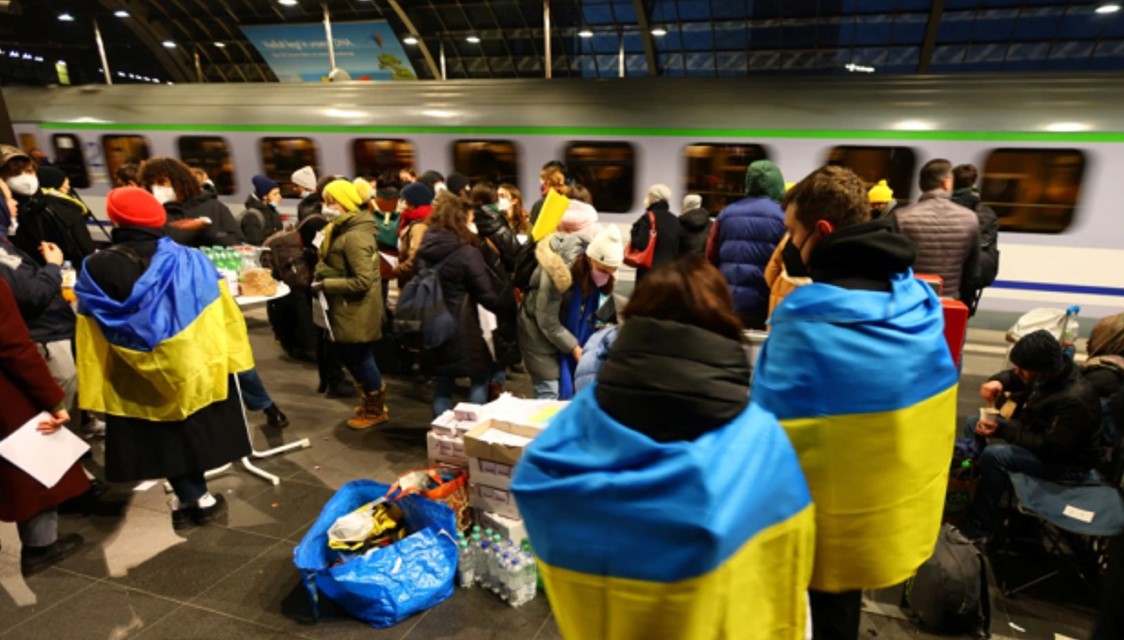
What is the scale of returns of Ukrainian citizens under readmission?
Ukraine has had a readmission agreement with the European Community for a long time, since pre-war times. Somewhere since 2024, we have been observing a gradual increase in the use of this mechanism, and EU countries are returning Ukrainian citizens as violators of migration legislation. This especially applies to those citizens who crossed the border illegally, there are a lot of such citizens among our citizens.
Relatively speaking, those that entered the EU through the Tisza?
Yes, but not only that. There are also those who did not obtain documents for residence in the European Union in a timely manner or committed an offense and a decision was made regarding them to reduce their residence in the EU. There are many factors.
A certain contradiction arises: on the one hand, we hear that European countries do not want Ukrainians to return home, because they are already seriously dependent on the Ukrainian workforce, and on the other hand, they make life difficult for our citizens, even to the point of expelling them from the country.
I wouldn’t call it a push-out in the sense that, for example, Bangladesh is engaged in. There is a review of certain rules for the stay of our citizens in the EU. Each country decides for itself how to do this – through social benefits, free housing, etc. First of all, in this way, the Europeans are trying to create conditions for our citizens to provide for themselves there. At the same time, they are interested in qualified workers remaining in their labor market, but it also has certain limitations.
To assess the overall migration dynamics of our citizens, we rely on the statistics of the State Border Guard Service. It is critically important to understand that these figures reflect the number of border crossings, not the number of unique individuals who left or entered Ukraine. Since the same person can cross the border multiple times (volunteers, drivers, people traveling on short-term trips), these data rather demonstrate the general trend of migration movement, rather than the exact number of migrants.
And this year we see an optimistic trend – the return of Ukrainians is beginning. Back in 2025, the balance of crossings of the state border by citizens of Ukraine was negative: 14.77 million entries against 16.13 million exits (i.e., there were 1.36 million more exits than entries). However, in January-April 2026, the trend changed: exits – 4.169 million, entries – 4.186 million. Although not much – by 17 thousand, this is the first period of positive dynamics of border crossings since the beginning of full-scale aggression. Although, of course, for final conclusions about the return of our citizens, we need to wait for data for the first half of the year and the entire year of 2026.

Among the factors that led to this turn: the stabilization of the energy situation, the gradual depletion of resources abroad by some citizens, and the aforementioned return programs of EU countries. But let’s be frank: expecting mass returns in conditions of active hostilities is unrealistic, a tangible turning point will not occur before the post-war period.
Pavlo Vuets, “Glavkom”
I’m glad that some European countries are putting in an effort to encourage Ukrainians to return to their country. People are essential for the nation; needless to say, not only for the military, but also for the industry. This trend is only positive.
In addition to returning Ukrainians, Ukraine needs managed immigration, ie a mix of highly skilled workers and construction labour. But all vetted securely.
Start by offering immigration for all foreigners who volunteered for the ZSU.
No mass immigration of toilet effluent as per the European model.
And immigrant law enforcement too. If our city is any indication, many “students” simply don’t go home. Why would they? Beautiful women, great food, cheap living, clean, nice people, grass…or back to their shithole.
Anyone who carries a Holy Bible and has a Zero Criminal Record, except for pruSSian trash, should get a chance.
Ukraine is not and never was a homogenous society.
Fully vetted Christians of all denominations are welcome of course.
But what Ukrainians want and need is pre-vetted, decent hard-working people from all cultures. Many cities in Ukraine, such as Odessa and Mykolaiv, contain at least 100 different ethic cultural backgrounds; all long established.
Between 1992 and 2014, Jews, including Krymchaks, were returning to Ukraine. What I particularly want to encourage is Jews; especially those with Ukrainian roots, to be returning from Israel and the US.
I also want the UK to completely ban antisemitism and become once again a country of choice for Jews.
Ukraine does not have any Jew-hatred or Islam-hatred. Only ruZZia-hatred.
You should remember also that Ukraine’s Chief Rabbi lost a son in this war.
There are thousands of Chechens in the ZSU; some have Ukrainian passports, some are volunteers from Chechnya who see an Ukraine victory as essential for their independence struggle.
I remember a family of New York Jews who moved to Lviv before 2014. They established bakeries, cafes and food supply companies. I have no idea if they stayed after the war, but people like that are to be encouraged.
Similarly, Ukrainian, Russian and Krym Tatars who suffered genocide from Stalin in WW2 were returning to Crimea, building homes and establishing businesses.
We want all of them back.
In addition, I’d take people like peshmerga warriors and their families, Yazidis, Kurds etc etc.
I’d take Koreans too; there already is a community in places like Odesa.
Ukraine is not and never was a homogenous society.
Fully vetted Christians of all denominations are welcome of course.
But what Ukrainians want and need is pre-vetted, decent hard-working people from all cultures. Many cities in Ukraine, such as Odessa and Mykolaiv, contain at least 100 different ethic cultural backgrounds; all long established.
Between 1992 and 2014, Jews, including Krymchaks, were returning to Ukraine. What I particularly want to encourage is Jews; especially those with Ukrainian roots, to be returning from Israel and the US.
I also want the UK to completely ban antisemitism and become once again a country of choice for Jews.
Ukraine does not have any Jew-hatred or Islam-hatred. Only ruZZia-hatred.
You should remember also that Ukraine’s Chief Rabbi lost a son fighting in this war.
There are thousands of Chechens in the ZSU; some have Ukrainian passports, some are volunteers from Chechnya who see a Ukraine victory as essential for their independence struggle.
I remember a family of New York Jews who moved to Lviv before 2014. They established bakeries, cafes and food supply companies. I have no idea if they stayed after the war, but people like that are to be encouraged.
Similarly, Ukrainian, Russian and Krym Tatars who suffered genocide from Stalin in WW2 were returning to Crimea, building homes and establishing businesses.
We want all of them back.
In addition, I’d take people like peshmerga warriors and their families, Yazidis, Kurds etc etc.
I’d take Koreans too; there already is a community in places like Odesa.