


October 6, 2026

BRUSSELS, Belgium — The European Commission published a document on Oct. 6 about the future of EU enlargement, a first step toward making Ukraine’s eventual accession feel real, but also laying bare some of the work the bloc needs to do to be ready.
“As enlargement countries advance on their path of reform, the EU must be ready to welcome them,” Commission President Ursula von der Leyen said in a press release.
The Commission was also asked by EU countries to propose ideas on how enlargement should work in the future, primarily in order to prevent backsliding on the rule of law by future EU members.
The 25-page communication is a first attempt to address both of these questions and to make enlargement feel like a real prospect for which the current 27 EU member states need to prepare.
It will be accompanied in October by a set of progress reports on how Ukraine and other candidate countries are faring with the reforms required of them, as well as concrete roadmaps for the four most advanced countries.
Those roadmaps will lay out specific milestones, with dates, between today and the eventual completion of the work required for Albania, Moldova, Montenegro, and Ukraine to become EU members.

The Commission’s decision to focus on four countries is also considered an important “political signal,” four different EU officials have told the Kyiv Independent.
“These countries have shown significant progress in terms of readiness over the last years,” said Enlargement Commissioner Marta Kos at a press conference to launch the document.
For Ukraine, that message is especially important, as its pace of reform has slowed in recent months, and given that it is much larger than the other three, its entry into the EU raises more challenging questions.
That decision to include Ukraine has also been coupled with a forceful defense by Kos of the reform work done so far, on the one hand, and a similarly strong push for Kyiv to keep passing reforms on the other.
Ukraine could break the bank
Just the financial cost of the EU’s relationship with Ukraine puts it in a different league than the other three countries being discussed.
“For Montenegro, the bill is one euro per person, per year, so it was extremely cheap,” a senior EU official told journalists ahead of the document’s publication.
“Most of the accession candidates are very small countries, so we expect this enlargement grant to be relatively affordable … Ukraine is a very different animal,” they said.
In the next EU budget, which spans 2028-2034, funding for candidate countries is set to come from a pot of money called “Global Europe,” which the original Commission proposal for the budget set at 200 billion euros ($225 billion).
That proposal mentioned 15 billion euros ($17 billion) to be available for all candidate countries — not just the four most advanced — and a 100 billion euro ($113 billion) reserve for Ukraine, intended to address reconstruction.
But the cost of Ukraine’s reconstruction was already estimated at $588 billion by the World Bank in February 2026.
“If you look at what has happened with funding of Ukraine, it’s been completely driven by the war,” the senior EU official explained in answer to a question from the Kyiv Independent.
“There is a massive uncertainty, no one is pussyfooting about that,” they said.
And farms strike at the EU's foundations
The EU’s farmers have jealously guarded their subsidy program, the Common Agricultural Policy (CAP), since its introduction in 1962.
In exchange for complying with EU rules, EU funding enables the bloc’s farmers to continue operating in a food landscape where they would otherwise be unable to compete on price.
But the sheer size of Ukraine’s agricultural sector puts it in a different league, prompting the Commission document to argue that “targeted arrangements should significantly limit financial support and market access for sensitive agricultural products.”
The farming sectors of Montenegro, Moldova, and Albania are “a small stone you put in a pond, it doesn’t create a lot of shocks and waves,” a second EU official explained.
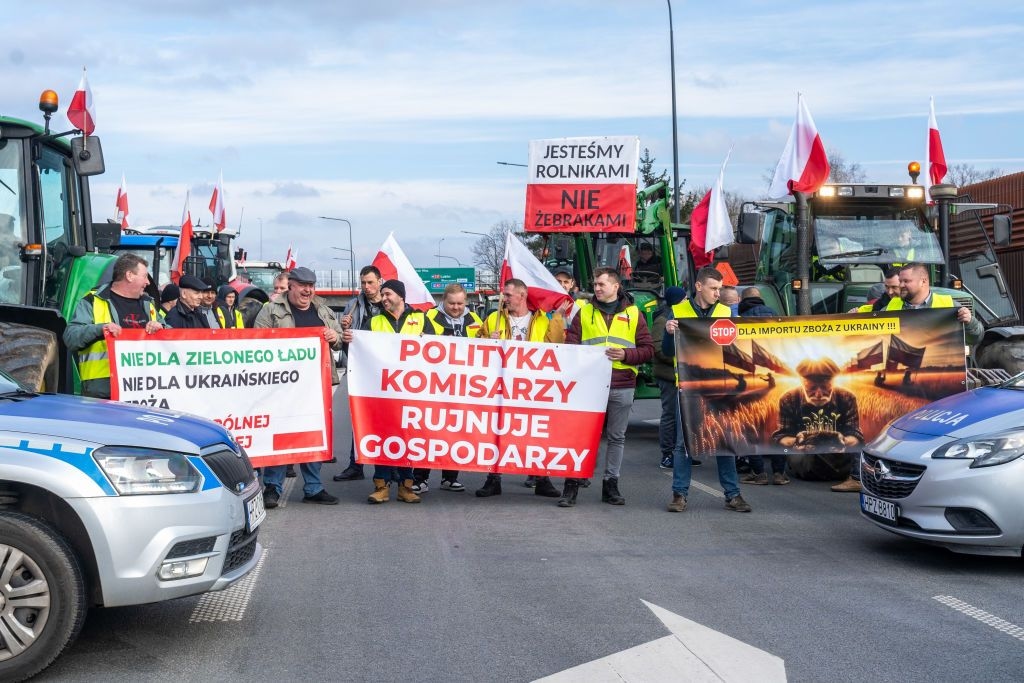
They explained that forcing Ukraine to fully integrate with all EU rules in the sector would raise their costs to the point that it could price them out of world food markets.
“Our budget can never compensate for gains that Ukraine’s very competitive — the only real competitive agriculture sector in Europe — can gain in the world,” a third EU official explained.
But equally, exempting Ukraine’s agricultural sector from EU standards risks breaking the bloc’s single market, which relies on all member countries’ businesses operating on a level playing field.
Ukraine “will and can become a member of the CAP. Under which conditions, this will be discussed,” Kos said.
“We also have to protect the farmers in the EU, and we are already discussing this subject with Ukraine,” she added.
The Commission’s document does not lay out a specific plan for addressing this already, arguing that it needs to be properly negotiated between Ukraine and EU countries.
However, two senior EU officials told journalists that they could see the discussion becoming very detailed, distinguishing between agricultural products. One rule for chickens, another for sunflower seeds, another for plant proteins, another for wheat, and so on.
More clear for them is that the EU needs to open the fifth enlargement cluster with Ukraine, and soon, where these questions can be fully grappled with.
The document commits the Commission to helping prepare the draft agreement for cluster five, to “reflect the targeted arrangements for Ukraine in the area of agriculture … at an appropriate moment.”
Ukraine already unlocked two of the EU’s six enlargement clusters in June and July, to-do lists of reforms required by the bloc in order for Kyiv to become fully aligned.
Another two are set to open on Oct. 13, if Kyiv passes a law expanding protections for the country’s Hungarian-speaking minority the day before.
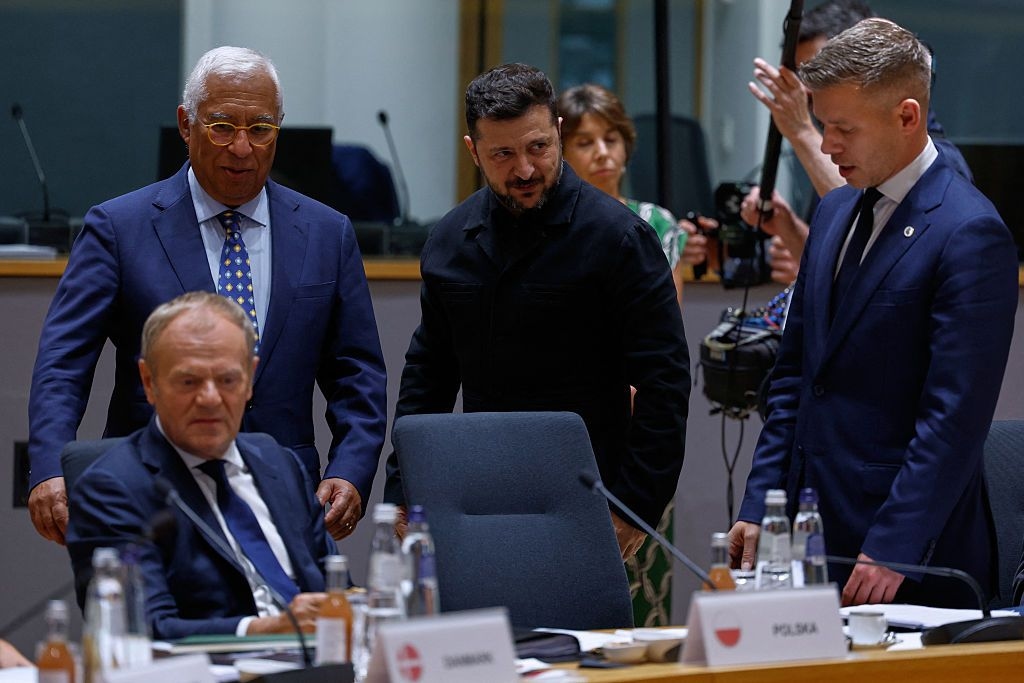
But the remaining two clusters cover sectoral issues such as agriculture and the trucking industry, where Ukraine has a competitive advantage, which intimidates some EU countries.
For the Commission, opening those two remaining clusters is important to do soon.
With a sweep of elections due to take place in EU countries in 2027, “if we do not make a step now politically, the discussion is going to get pretty complex,” one EU official warned.
Two-tier EU membership ruled out
To help make the prospect of Ukraine joining the EU more palatable over time, the Commission also makes several proposals on “gradual integration” of candidate countries into the EU.
Essentially, the plan would be to reward alignment with the EU by already unlocking some of the benefits that come with membership.
The idea is not entirely new, with Ukraine already included in the bloc’s mobile roaming area, and Ukrainians being able to participate in the Erasmus youth exchange program.
But now the Commission wants to map every EU policy area, institution, agency, and program, for what could be offered to candidate countries, and when.
What gradual integration is not, however, is an alternative to EU enlargement, the document notes.
Likewise, the Commission is not proposing that new EU countries have fewer veto rights than existing members, except for a small voluntary commitment for countries not to use bilateral issues to stop other countries from joining.
And the plan to introduce safeguards to curtail voting rights if a country backslides on rule of law “will only be in place if there are breaches,” Kos said.
Some other ideas pitched to include candidate countries more in the EU, such as observer seats in the European Parliament and Commission, as proposed by German Chancellor Friedrich Merz, did not make it into the document.
“We don’t want to open a new policy or political discussion,” one senior EU official explained.
Instead, the plan is to show what is possible with the EU’s existing framework, but if countries agree on other specific ideas, they can formally propose them.
One opportunity for EU countries to weigh such ideas will be when leaders are set to discuss the Commission’s document as a whole on Oct. 15 in Brussels.
And it is expected that President Volodymyr Zelensky will be there with them.
Poland was not restricted in its grain exports when it joined the European Union on May 1, 2004.
Pre-Accession Restrictions: In late 2003 and early 2004 (from August 28, 2003, through April 30, 2004), the Polish government temporarily placed its own national export fees on wheat and other grains to protect domestic supplies and manage local prices ahead of joining the bloc.
Post-Accession Integration: Upon joining the EU on May 1, 2004, those national export restrictions were eliminated. Poland integrated into the EU’s Single Market and the Common Agricultural Policy (CAP), which removed internal trade barriers and tariffs on agricultural products, allowing Polish farmers and exporters to trade freely within the EU and benefit from expanded market access.
Shows how hypocritical and nonsensical these protests by idiots in Poland are.