

This is the story of how a stubborn Frenchman transformed a coastal village into the Black Sea’s main grain hub. You’ll also learn lessons about Odessa’s tolerance from two centuries ago, which are more relevant today than ever. Ukrainian writer and journalist Alena Sinenko demonstrates why the greatness of cities is born not from imperial dictates, but from freedom, peace, and southern stubbornness.
In the early days of spring 1803, a horse-drawn carriage slowly made its way through impassable mud toward the Black Sea. A flat, ghostly landscape, cut by gnarled, wind-battered trees, stretched to the horizon. One of the carriage’s passengers, a 36-year-old French aristocrat, gazed at the boundless expanse of the steppe and pondered the monumental task that lay before him.
Armand Emmanuel du Plessis, Duke of Richelieu, was on his way to Odessa to become its first mayor after his ambitious project to transform the settlement into a major center of international maritime trade became bogged down in the mud of the new city’s unpaved streets.
When the carriage arrived at its destination, Richelieu found a dreary town of about 9,000 people. It contained several hundred buildings, many of which remained unfinished. No evidence of a formal welcome or ceremony honoring the new mayor survives. The man who had often frequented the royal courts of Versailles, Vienna, and St. Petersburg was greeted only by howling winds and raging waves.
He settled into a modest house on Lanzheronovskaya Street and immediately set to work, requesting reports on the state of affairs in the city—the picture was depressing. Expenses exceeded revenue. The city suffered from water shortages and a lack of infrastructure. Progress was slow.
Richelieu’s letters and memoirs relating to this period are unusually dry, limited to bare facts. A talented administrator, he viewed Odessa as a problem to be solved. In his “Notes on Odessa,” written in 1813—shortly before returning to France to assume the post of prime minister—he recalled that upon his arrival, it took him six long weeks just to find a dozen simple chairs in the city. And yet, he expressed not the slightest irritation.
Richelieu’s maritime ambitions and managerial talent were not surprising. After all, he was the great-nephew of Cardinal Richelieu , who began transforming France into a powerful maritime power.
With the Edict of Saint-Germain in 1626, the cardinal established the first permanent and organized state navy, seeking to centralize control over maritime trade and assert France’s military power. Marseille was a strategic port on the Mediterranean, and Richelieu sought to establish full royal control over the city and expand its galley arsenal to counter the threat from Spain.
By undermining his rivals and enlisting the support of influential local allies, he attempted to strengthen his authority in the city. However, Marseille proved difficult to subdue. Its residents resisted taxes, and in 1634, riots broke out against Richelieu’s representatives, while conflicts over maritime rights and revenues continued. After the cardinal’s death in 1642, this port, so crucial to French maritime interests, remained effectively ungovernable.

The port of Marseille in the 18th century, during the heyday of Mediterranean trade
While Cardinal Richelieu was trying to pacify the rebellious Marseille and bring it under the control of the French Empire, his great-nephew used his influence and reputation to secure extensive freedom for Odessa, so that the city’s strategic position would bring it prosperity.
In 1802, Napoleon wrote in a letter to Alexander I: “Your Majesty and France would receive significant benefits if a direct trade route were opened between our Mediterranean ports and Russia via the Black Sea… We could directly deliver our colonial and industrial goods from Marseille to the Black Sea ports. And in exchange, we would receive grain, timber, and other goods that are easily transported along the large rivers flowing into the Black Sea.”
Richelieu devoted all his energy to developing international trade, and it grew rapidly. In 1802, 100 foreign ships passed through Odessa, and by 1805, this number had reached almost 700. At the same time, he sought free port status for the city, which, a few years later, transformed Odessa into a free port and attracted enormous wealth. This flourishing trade laid the foundation for centuries-old ties between Odessa and Marseille, which became sister cities in 1973.

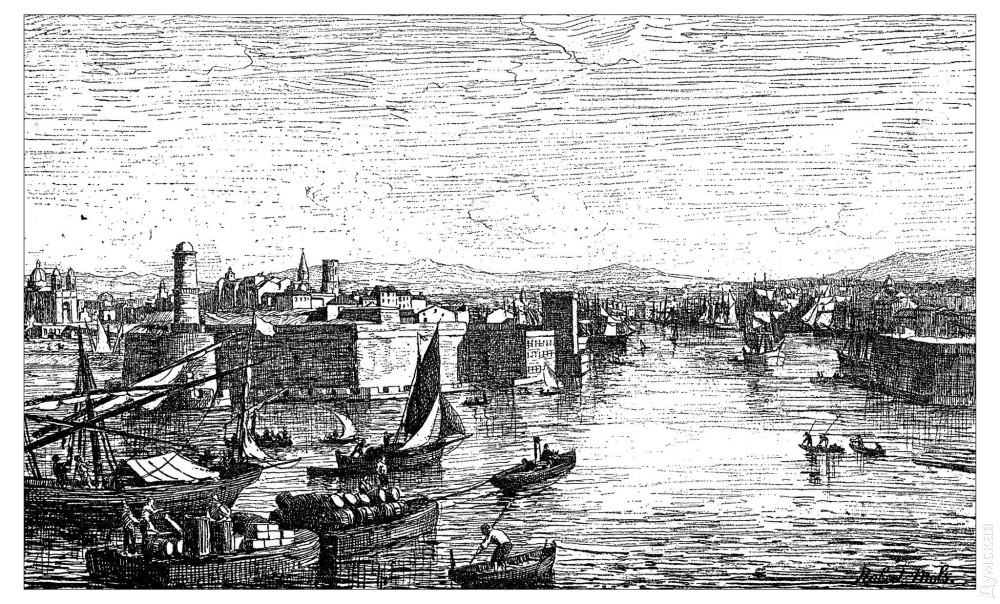
The port of Marseille in the 19th century was the maritime equivalent of Odessa during the era of its dominance on the Black Sea.
Odessa’s impressive early success became part of its global myth. At the same time, the figure of Richelieu—a tireless and meticulous man who considered no task too small or insignificant, and no person unworthy of attention—became a legend for generations of Odessans.
Richelieu possessed a rare talent for recognizing people who could help him. One such person was Charles Sicard, a native of Marseille, who settled in Odessa in early 1804 and captured the city’s profound transformation in his “Letters on Odessa.”

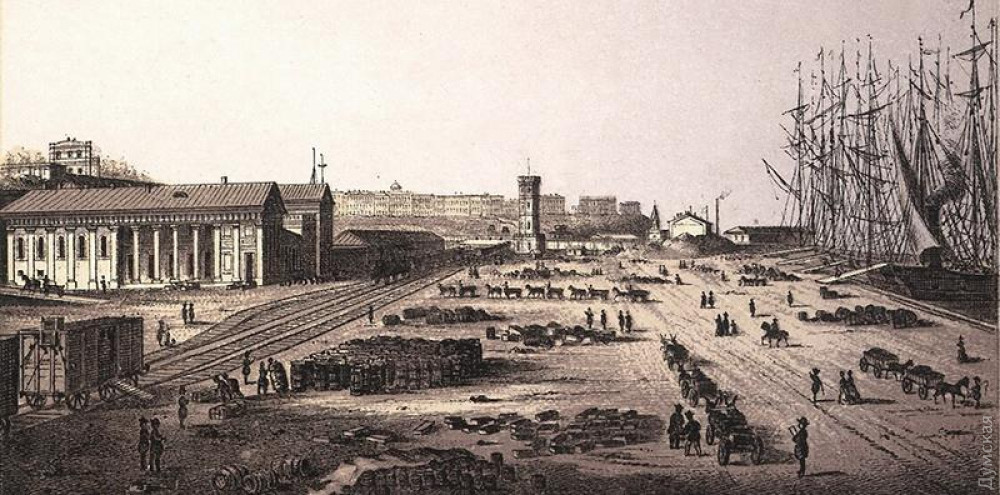
Odessa’s commercial port in the mid- 19th century: coastal warehouses, horse-drawn carriages, and sailing ships testify to the city’s transformation into a leading grain hub in the Black Sea region.
By the time Letters on Odessa appeared in 1809 in the Geneva journal Bibliothèque Britannique, Europe was being torn apart by the wars that the French Revolution had unleashed on the continent: militarism was permeating culture, mass mobilization was gaining momentum, and the death toll was in the millions.
At a time when war was being presented as inevitable and necessary, the words of an Odessa merchant might have seemed naive: “I believe that, against the backdrop of the disasters that have befallen world trade, an example of an entirely different kind may serve as consolation—a description of the state of trade in Odessa… You will find here proof that the prosperity of a people, like the prosperity of an individual, is born from within; that it cannot be achieved by violence… and that this precious sprout of human well-being can blossom only through careful care and peace.”
But throughout the Russo-Turkish and Napoleonic wars, Odessa—a multinational and multilingual city, where even the mayor himself was a foreigner—maintained stability and continued to thrive. The tolerance and respect that Duke Richelieu fostered among the diverse population bore fruit. Cardinal Richelieu never succeeded in subjugating Marseille, but his great-nephew gave Odessa the freedom and peace that allowed it to flourish. It was he who shaped its distinctive identity, and the monument erected at the main sea entrance to the city after his death has become one of Odessa’s most recognizable symbols—it will turn 200 years old in 2028.

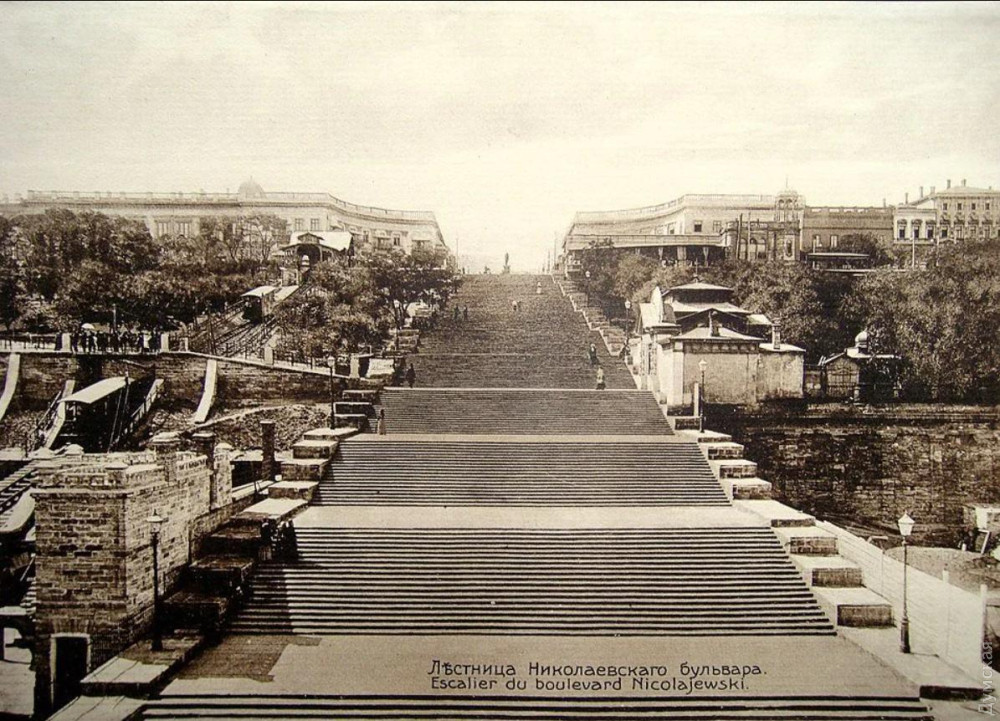
The Potemkin Steps, leading from Odessa harbor to the monument to Duke de Richelieu, are an enduring symbol of the idea that brought this city to life.
The author is Ukrainian writer and journalist Alena Sinenko
(c)DUMSKAYA.NET 2026